About Cyclyrius webbianus (Brullé, 1840)
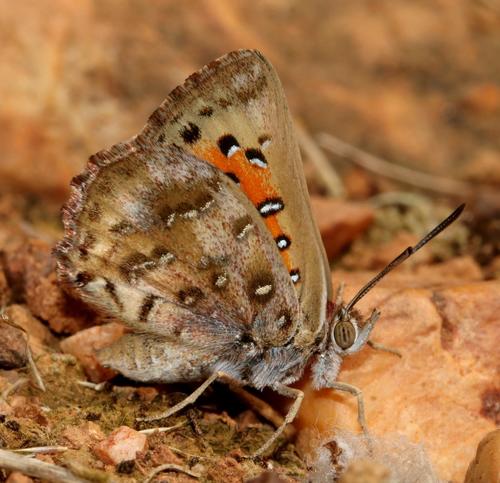
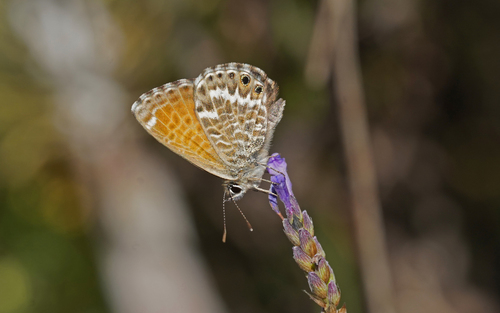
Scientific name: Cyclyrius webbianus (Brullé, 1840), originally also described as Seitz P. webbianus Brulle (synonym fortunata Stgr.) (77 k). Both males and females are quite dark brown on the upper wing surface, with a dull blue gloss. This species can be immediately identified by its patterned variegated underside. On the underside, the disc of the forewing is yellowish brown, with white spots located before the apex. The hindwing is dark grey-brown, with light striation and an irregular white band. The wing fringes are spotted. This species is found only on the Canary Islands. Its larvae are reported to feed on the flowers of Cytisus canariensis and Cytisus nubigenus. Adult butterflies fly at considerable altitudes on the Pic of Teneriffe, where they are locally very plentiful. They also occur in the plains, where they are encountered more singly. Simony found individuals high up in vegetation-free localities, where the butterflies rested on blocks of lava. They are apparently on the wing throughout the year, and are especially common in August. They fly around the branches of tamarisk and visit the flowers of Adenocarpus viscosus. One specimen was collected at Orotava, in the immediate neighbourhood of the old dragon-tree, which was still standing at the time of collection.