About Cyclocephala lurida Bland, 1863
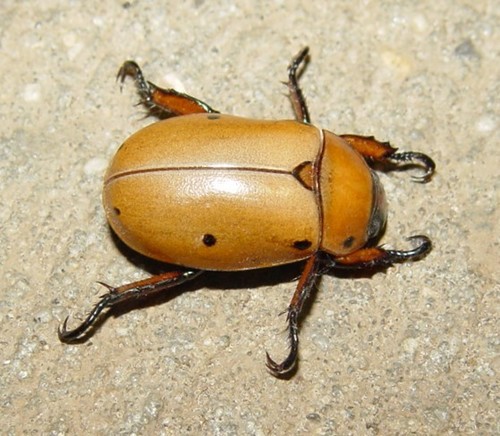
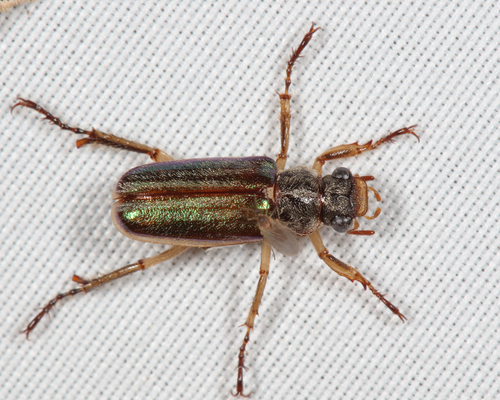
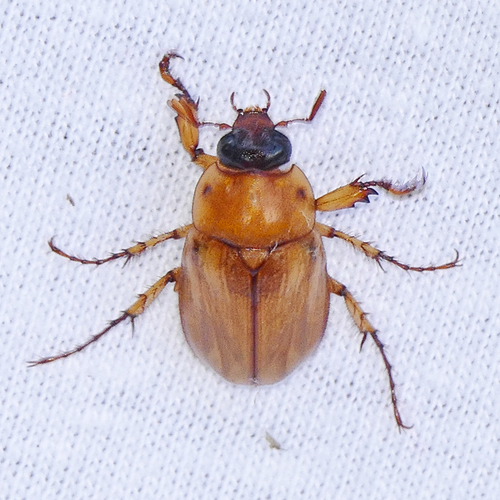
Cyclocephala lurida, commonly known as the southern masked chafer, is a species of scarab beetle native to the southeastern United States. Adults are brown with black heads, and measure between 10 to 14 mm (0.4 to 0.6 in) in length. While adult southern masked chafers cause no damage, their larvae can harm lawns: females lay eggs underground, and developing larvae feed on grass roots, which can kill turf when conditions are dry. This species has a one-year life cycle. In June and July, shortly after sunset, female southern masked chafers emerge from the soil, and remain on the ground surface or climb on grasses. Males emerge around the same time and fly in low, zig-zag patterns over the ground. Females produce a volatile pheromone that attracts males. Once a male locates a female, the pair mates, after which the female burrows back into the soil to lay her eggs underground. Larvae feed on grass roots until the following late spring, when they pupate; adults emerge roughly two weeks later. Adults are active for only a few weeks each year. By 11pm during the breeding season, all males and unmated females move back underground. Researchers have observed that after this time, unmated females kept in traps above ground start to attract the closely related northern masked chafer (Cyclocephala borealis). This species normally mates after midnight, and likely uses the same pheromone to communicate. Research also shows that southern masked chafer larvae release pheromones, and adult males may attempt to mate with larvae that are found on the surface. Adult males and larvae do not normally interact, because larvae live entirely underground and usually finish pupating before adults emerge. A soil-dwelling bacterium called milky spore (Paenibacillus popilliae) causes developmental delays in infected larvae; the researchers observed these delayed, infected larvae above the soil surface. The ability to release pheromones, present in larvae of both sexes, is retained in adult females but lost in adult males. Along with Japanese beetle (Popillia japonica) larvae, southern masked chafer larvae are considered the most damaging turf pests in the midwestern United States. When populations are high, larvae can kill large areas of turf. Ants, specifically the thief ant (Solenopsis molesta), are natural predators of this beetle’s eggs and larvae. Applying insecticides before the beetle’s egg-laying season greatly reduces this natural predation. Turf damage from these beetles is an annual issue. Areas regularly treated with organophosphate pesticides almost completely lack ants, so the natural control of beetle eggs and larvae provided by ants is eliminated. Raccoons and skunks also feed on the larvae, and pull up turf while searching for them.