About Cyclanthera pedata (L.) Schrad.
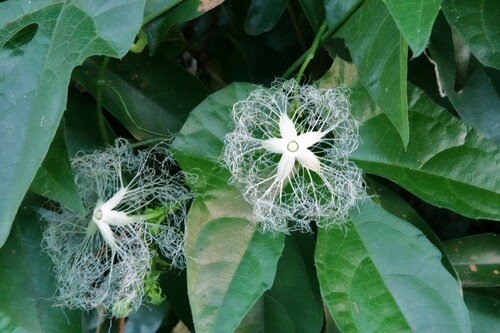
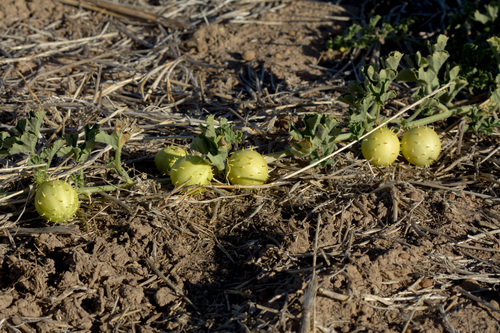
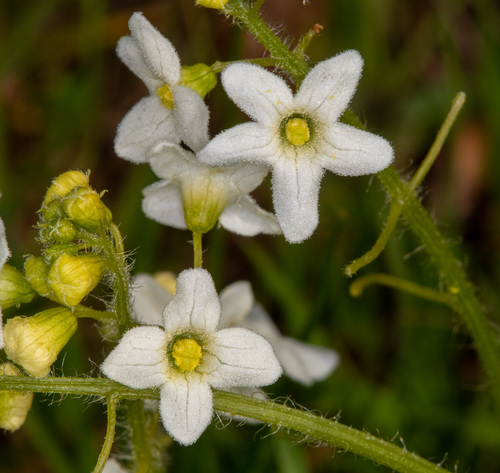
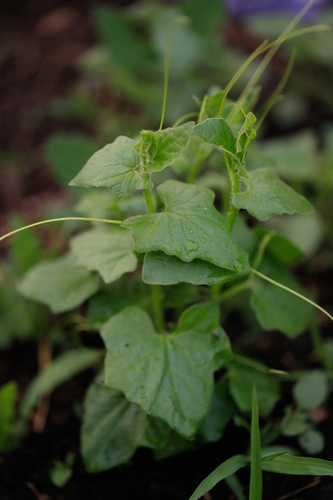
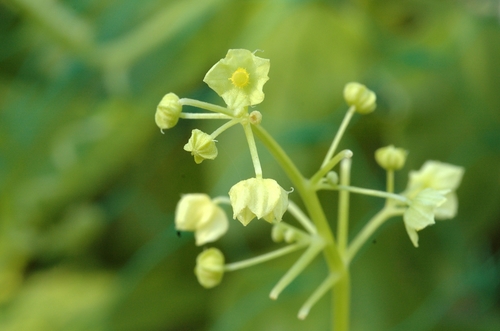
Cyclanthera pedata (L.) Schrad. is a vine that can reach 12 meters in length, with thin stems. Its leaves can grow up to 24 centimeters long, and are either palmate or pedate in shape. The small flowers of this species are greenish or white, and they grow in racemes. The fruit is light green, ovoid, curved, and up to 15 centimeters long. It is almost hollow, containing only seeds and a thin layer of flesh. The fruit skin is usually smooth, but is sometimes covered in soft spines, and the plant's seeds are black. When its leaves are injured, they are reported to release a cucumber-like odor. The fruit flesh is soft and spongy rather than crunchy, and is only 0.5 centimeters thick; it is said to taste like cucumbers, though other descriptions note its flavor is similar to a cross between cucumber and green bean, or that it is otherwise tasteless. Cyclanthera pedata is presumably native to the Andes, and was first domesticated in the mountainous regions of Peru. After domestication, it spread to Southeast Asia and Africa. In Africa, it is only cultivated in the highlands of East Africa. It is grown on small-scale farms in mountain areas of Mexico, Central America, and South America, and is sometimes cultivated in Asia. For food use, the fruits are eaten after their seeds are removed. Young fruits can be eaten fresh, added to salads, sautéed, or served as a side dish. Mature fruits are typically stuffed with meat, fish, or cheese, and can be fried, breaded, or baked. Young shoots and leaves can also be eaten as cooked greens. In Kashmir, people traditionally remove the seeds, dry the fruit, and consume it during the winter. The fruits are a source of potassium, magnesium, and phosphorus. Cyclanthera pedata, also called caigua, has been traditionally used in South American folk medicine for its claimed anti-inflammatory, hypoglycemic, and hypocholesterolemic effects, particularly for managing blood pressure and cholesterol levels. It is believed to be effective against atherosclerosis and circulation problems, and is used as an analgesic. Infusions made from caigua are commonly consumed to help control hypertension and improve cholesterol levels. Clinical studies have found that daily oral doses of dehydrated caigua fruit significantly reduce serum cholesterol in post-menopausal women.