About Cyanopica cooki Bonaparte, 1850
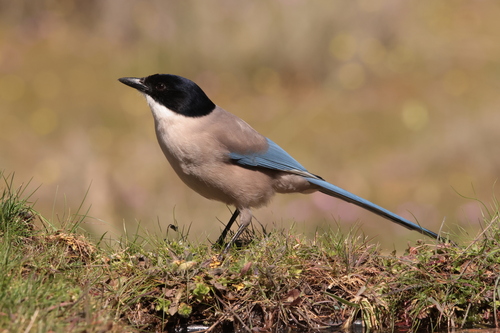
This species, commonly known as the Iberian magpie, has a glossy black crown and a white throat. Its underparts and back are colored light grey-fawn, while its wings and the feathers of its long 16–20 cm tail are azure blue. The Iberian magpie is native to the southwestern and central parts of the Iberian Peninsula, which span Spain and Portugal. It can sometimes be spotted in southwestern France, and its presence in northwestern Italy has been reported in recent years. It lives in a variety of coniferous forests (mainly pine forests), broadleaf forests, and also occurs in parks and gardens among its eastern populations. Iberian magpies often forage for food as a single family group or in multiple groups, forming flocks that can reach up to 70 birds. The largest flocks gather after the breeding season and throughout the winter. Their diet is mainly composed of acorns (oak seeds) and pine nuts, and is extensively supplemented with invertebrates and their larvae, soft fruits and berries, and human-provided scraps in parks and towns. This species typically nests in loose, open colonies, with one nest per individual tree. It has a mean clutch size of 6.2 eggs, but only 32% of nesting attempts are successful, with an average of 5.1 young fledged per successful attempt.