About Cyanocorax sanblasianus (Lafresnaye, 1842)
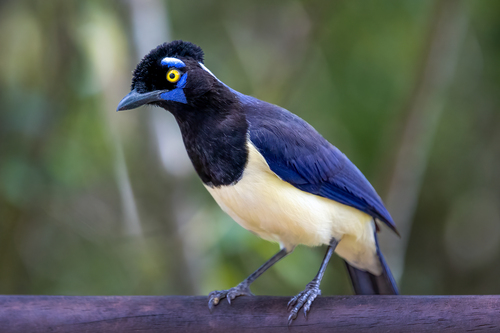
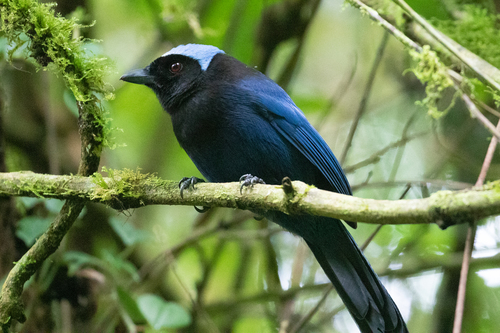
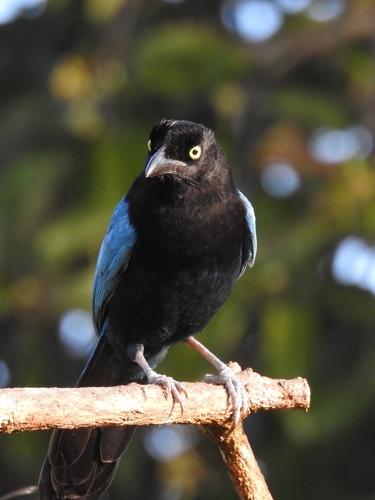
The adult San Blas jay (scientific name Cyanocorax sanblasianus) measures 27 to 35 cm (11 to 14 in) in length and weighs 92 to 122 g (3 to 4 oz). Males and females look similar: adult individuals have blue back, rump, wings, and tail, with all other plumage colored black. They have a small crest on the front of the head, a black bill, white irises, and black legs. Juveniles look similar to adults, except they have a larger crest, a yellow bill, and brown eyes.
This jay species is endemic to Mexico. It has two recognized subspecies: C. s. nelsoni occurs in southwestern Mexico, ranging from Nayarit, Jalisco, and Colima south to western Guerrero, while C. s. sanblasianus is found in the coastal region of Guerrero. Its typical habitats include dry and semi-moist woodland, thickets, groves, plantations, and mangrove areas, and it does not live deep within closed forests.
San Blas jays are social, living in small groups of up to 30 individuals, which contain six to ten breeding pairs. Each group occupies a large territory and has little interaction with neighboring groups. This species generally forms stable pair bonds, and most individuals begin breeding when they are three years old. Nests are built in grouped social locations in trees, vines, or shrubs, most often in the crowns of palm trees. Each nest is constructed from twigs and lined with soft plant material, and clutches contain up to four mottled eggs. Non-breeding females sometimes take short shifts incubating the eggs, and the total incubation period lasts approximately 18 days. Both parents care for the young, and multiple additional group members may help feed the chicks, especially after they fledge. The San Blas jay is an omnivore that forages both on the ground and in the lower sections of trees. Its diet includes insects and other invertebrates, fruit, and small vertebrates such as lizards. Individuals have been observed preying on the nestlings of the ruddy ground dove (Columbina talpacoti).