About Cyanea shipmanii Rock
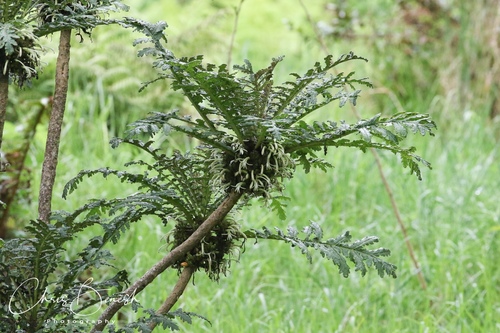
Cyanea shipmanii Rock, commonly called Shipman's cyanea, is a rare flowering plant in the bellflower family. Like other Cyanea species, it is called haha in the Hawaiian language. This species is endemic to the island of Hawaii, and is only found on the windward slopes of Mauna Loa and Mauna Kea. It is a federally listed endangered species of the United States. New wild populations of this species, which typically only contain a small handful of individuals each, are still rarely discovered at widely scattered locations in windward native forests, at elevations between roughly 5000 and 6000 feet. In recent years, hundreds of nursery-grown C. shipmanii have been widely outplanted. However, these outplantings have very low genetic diversity, because they descend from a small number of original wild plants. It remains unclear whether any of these recent outplantings will produce self-sustaining wild populations. Only 37% of planted C. shipmanii seedlings have survived in their outplanted habitat. This Hawaiian lobelioid is a fragile, sparingly branched shrub that can grow up to four meters tall. Its leaves are deeply divided and subdivided into many tiny lobes, giving them a shape that resembles fern fronds. As is common in many other Cyanea species, the leaves and stems of young C. shipmanii plants, and the lower sections of larger mature plants, are covered in weak, thorn-like bristles. The plant's inflorescence holds many greenish white flowers, and produces clusters of small orange fruits, each of which contains many small seeds. This plant's natural habitat is moist native forest growing on well-developed volcanic soil. Habitat degradation caused by logging, cattle ranching, non-native invasive plant species, and feral pigs has pushed Cyanea shipmanii toward extinction.