About Curio articulatus (L.fil.) P.V.Heath
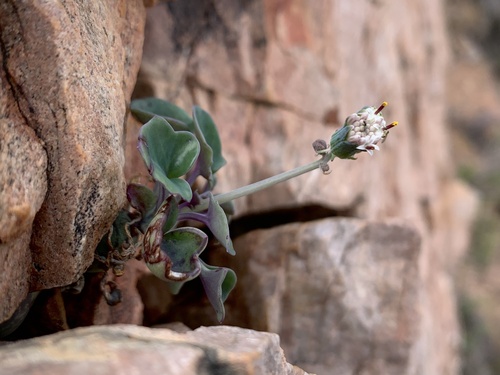
Curio articulatus has bluish-green to grey, sausage-shaped stems. Leaves are present only around 50 percent of the time; when they grow, they are olive green on the upper surface and purplish on the lower surface. This species is usually dormant and leafless for most of the year, and produces new leaves and white to pinkish discoid flowers in winter. It grows as a sprawling clump or subshrub reaching 22 to 40 cm in height, and can grow much taller when grown in shaded conditions with excess watering. It spreads via tubers that form a persistent underground structure. Its inflorescences are 12 to 20 cm tall forked corymbs that hold small rayless flower heads. These heads are made up mostly of small cup-shaped, inconspicuous disk flowers that have an unpleasant odor, and are pollinated by insects including flies, beetles, and bees. This is a rare and unusual plant, most often grown as an ornamental container plant in well-draining soil and partial shade. It is drought-tolerant, and grows naturally in dry arid regions of southern Africa. It can be grown as an indoor potted plant, and for outdoor cultivation, temperatures should not regularly drop below 7°C (45°F), though it can survive temporary temperatures as low as -4°C (25°F). Its cultivar 'Candlelight' has received the Royal Horticultural Society's Award of Garden Merit.