About Curculionidae
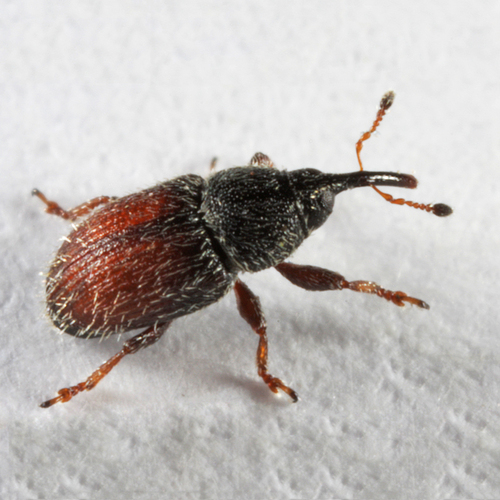
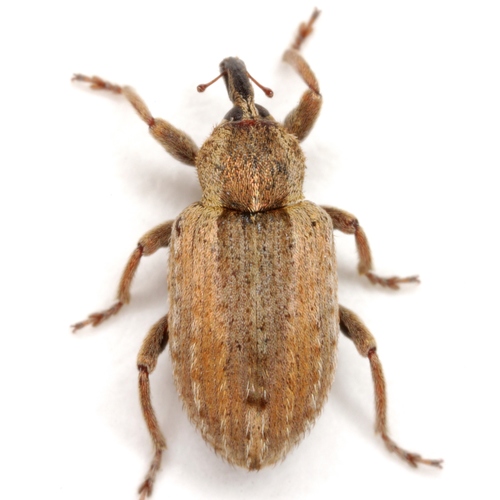
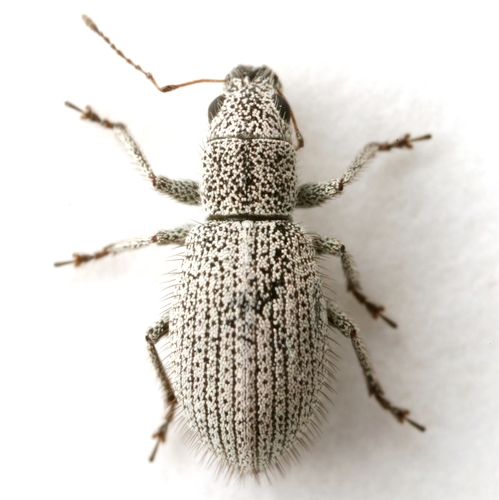
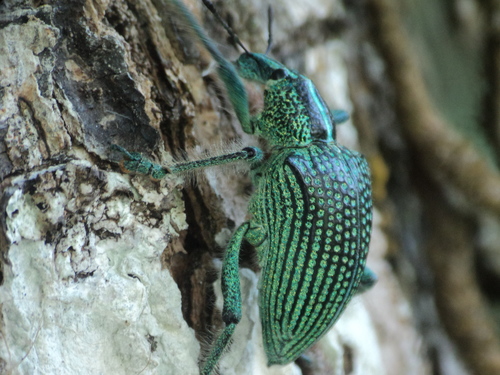
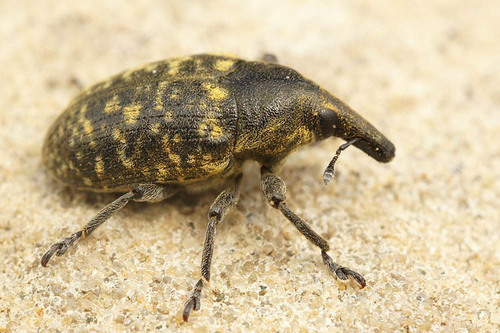
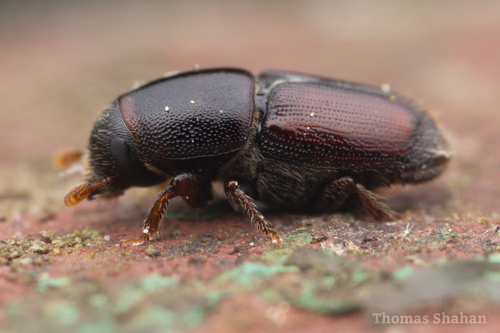
Adult Curculionidae, commonly known as weevils, can be identified by the well-developed, downward-curving snout (called a rostrum) that most species have. However, the rostrum may be short in some groups, such as the subfamily Entiminae. Adults have elbowed antennae that terminate in club-like tips, and the first antennal segment often fits into a groove running along the side of the rostrum. Their bodies are typically robust, convex, heavily sclerotised, and covered in either scales or bristles. Species in this family range in total length from 1 mm to 35 mm, though most fall between 5 mm and 15 mm. Most Curculionidae exhibit sexual dimorphism: compared to males, females have antennae positioned closer to the base of the rostrum, and a longer, thinner rostrum overall.
Larval Curculionidae are C-shaped, with only light sclerotisation of their bodies. They have very small antennae, robust mandibles, and no legs. Both larvae and adults of most weevil species feed on living plants. Many species are major pests of cultivated crops, as they chew holes into fruits, nuts, and other plant structures. Most adult females use their long rostrum to create openings in plant tissue to lay eggs, a process called oviposition. A number of subgroups feed on different materials: for example, members of Cossoninae and Cryptorhynchinae feed on rotten wood or bark, while members of Platypodinae and some Scolytinae are wood-boring species that feed on ambrosia fungi. Pesticide resistance was not historically a common problem in this group of insects, but a mutation linked to the voltage-gated sodium channel has recently been discovered in the maize weevil species Sitophilus zeamais. This finding indicates that much remains unknown about how Curculionidae adapt to changing environments.