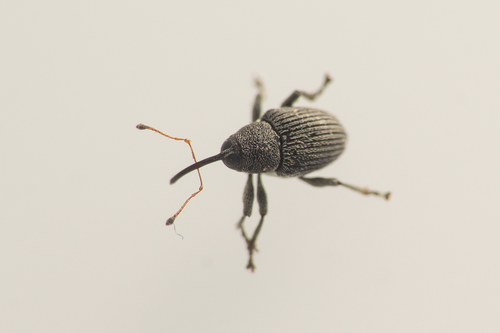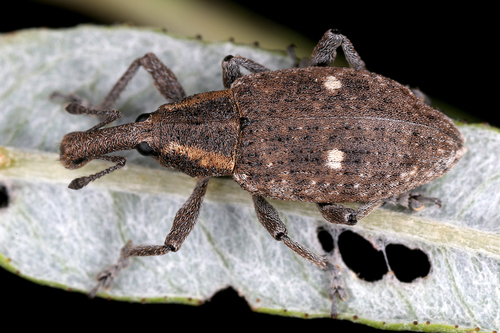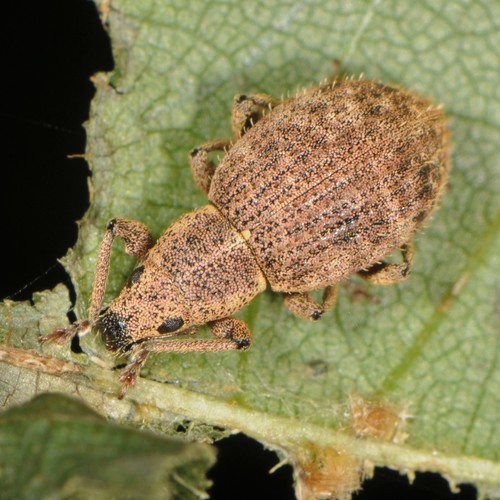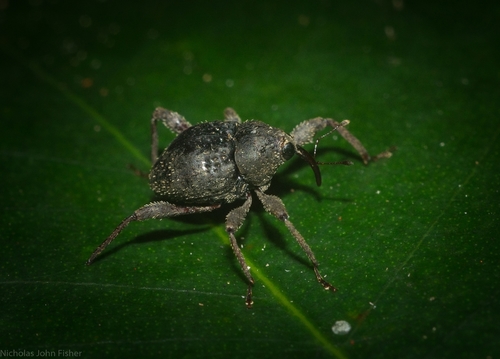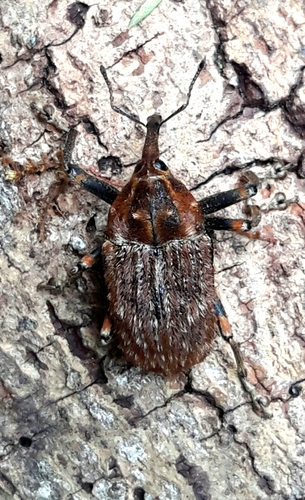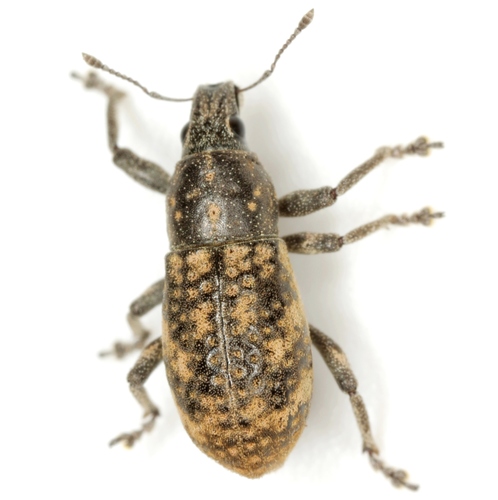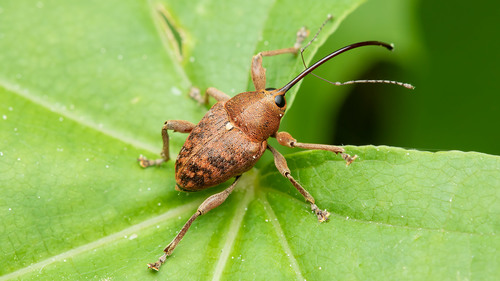
About Curculio glandium T.Marsham, 1802
Curculio glandium is a species of seed beetle that belongs to the genus Curculio. All members of the genus Curculio have characteristic long rostrums and ovipositors, an adaptation that evolved due to their reliance on seeds for food and reproduction. Males and females of C. glandium can be differentiated by their rostrums, as females have longer rostrums than males. Larvae of this species are short and cylindrical, and move using ridges located on the underside of their bodies. Adult C. glandium reach a length of 4 to 8 mm (0.16 to 0.31 in).
For their life cycle, adult weevils chew channels into acorns to deposit C. glandium eggs. Females use their long, narrow ovipositor to place the eggs into the acorn. Eggs are not laid into the acorn's embryo, and the acorn plant heals the entry holes, which seals the holes and protects the eggs from parasites. After hatching, one or two larvae consume the acorn's tissue. While larvae may eat the entire acorn, they typically do not consume the acorn's embryo. After the acorn falls to the ground, C. glandium larvae leave the acorn and burrow into soil, where they live for 1 to 2 years before pupating and emerging as adult weevils. The larvae are freeze avoidant, which stops their internal body fluids from freezing during winter.
In terms of ecology, Curculio glandium can pose a major risk to populations of acorn-bearing trees. They are highly effective at infecting acorns, which can cause many seeds to lose the ability to germinate. Infestations can leave 70–90% of acorn seeds incapable of germination.