About Cupressus sempervirens L.
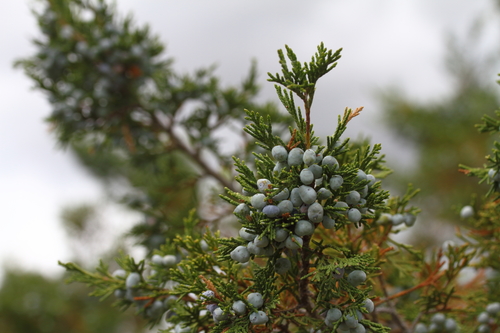
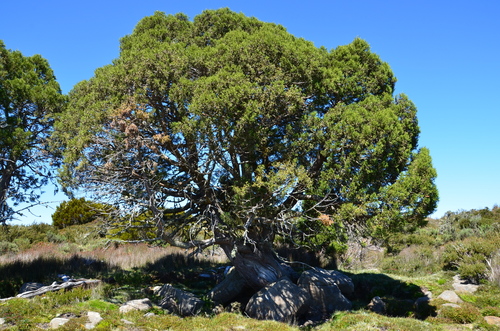
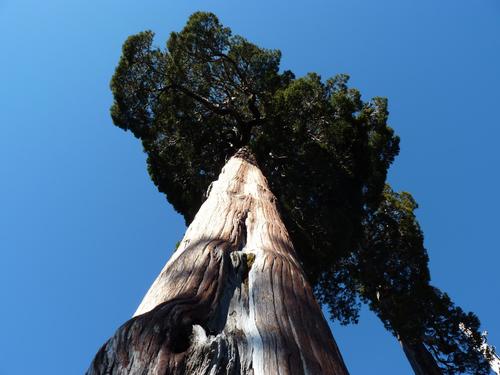
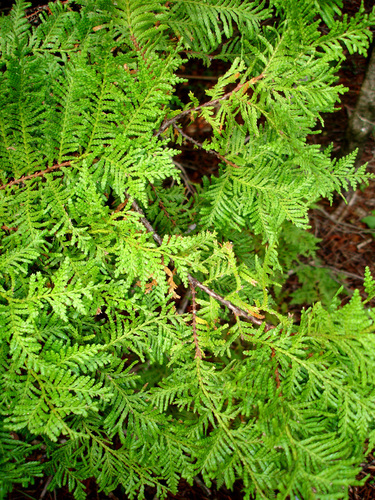
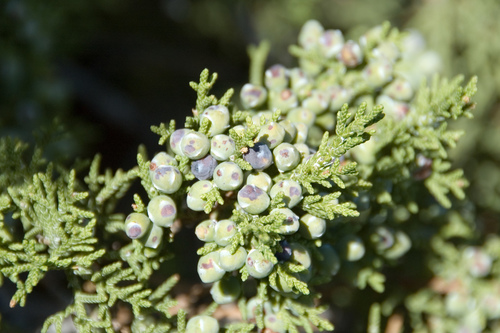
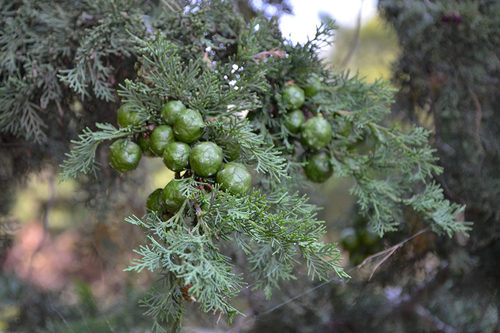
Cupressus sempervirens L. is a medium-sized coniferous evergreen tree that reaches a maximum height of 35 m (115 ft). It has a conic crown with level branches, and its branchlets are variably loosely hanging. This species is extremely long-lived, with some individual trees recorded as over 1,000 years old. It produces lateral shoots (branches) that often grow upward toward a light source. Its foliage forms dense, dark green sprays. The leaves are scale-like, measuring 2–5 mm long, and grow on rounded rather than flattened shoots. Its seed cones are ovoid or oblong, 25–40 mm long, with 10–14 scales. The cones start green and mature to brown roughly 20–24 months after pollination. Male cones are 3–5 mm long and release highly allergenic pollen in late winter. C. sempervirens cones are serotinous, meaning they can stay sealed for many years. The tree is moderately susceptible to cypress canker, a disease caused by the fungus Seiridium cardinale, and can experience extensive dieback in regions where this fungus is common. The species epithet sempervirens is Latin for 'evergreen'.
C. sempervirens has been widely cultivated as an ornamental tree for thousands of years outside its native range, primarily across the Mediterranean region. It is also grown in other areas with similar climates: hot, dry summers and mild, rainy winters, including California, southwest South Africa, and southern Australia. It grows successfully in regions with cooler, wetter summers as well, such as the British Isles, New Zealand, and the Pacific Northwest. It is also planted as an ornamental in Florida and parts of the coastal southern United States. In some areas, especially the United States, it is commonly called Italian cypress or Tuscan cypress. Within its native range, it has historically been planted in gardens and cemeteries, and used as a windbreak along roads. The tree can also reduce land damage caused by severe weather. The vast majority of cultivated trees are selected cultivars with a fastigiate crown; their erect branches form a narrow to very narrow crown that is often less than one-tenth as wide as the tree is tall. The dark green, exclamation mark shape of these cultivars is a defining characteristic of Mediterranean landscapes.
In medicine, while some modern studies have identified medicinal properties in Cupressus sempervirens, it is best known for its use in folk medicine. Its dried leaves are used to treat a range of ailments. Dried seeds of the species are sometimes used to help manage skin conditions like acne and support healing of cuts and scrapes. Oil extracted from its leaves can aid recovery from minor ailments such as nasal congestion. In cosmetics, it is used as an astringent, a firming agent, an anti-seborrheic, an anti-dandruff treatment, an anti-aging ingredient, and a fragrance. It is also the traditional wood used to craft Italian harpsichords.