About Cupressus lusitanica Mill.
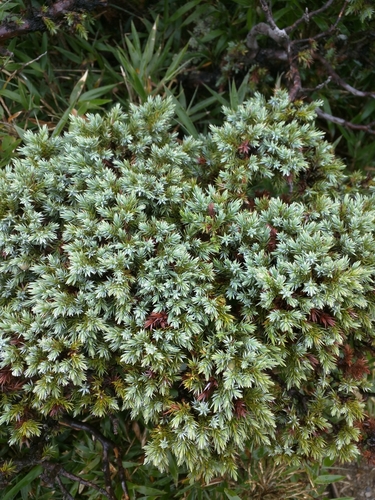
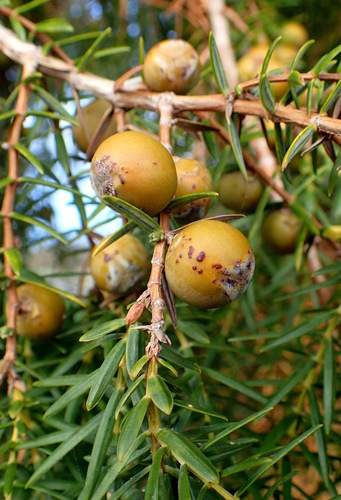
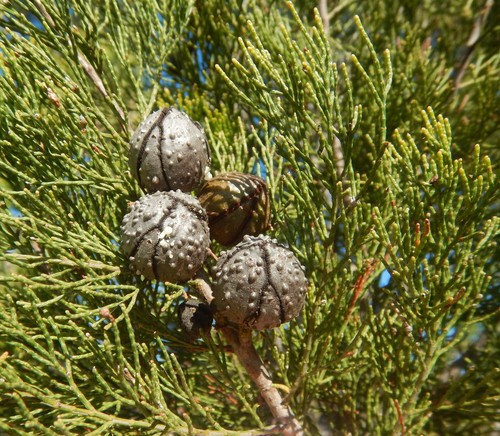
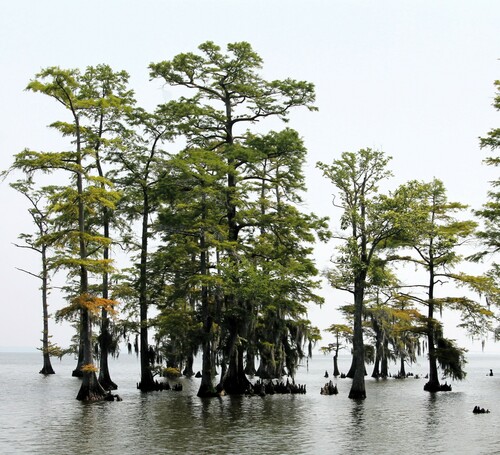
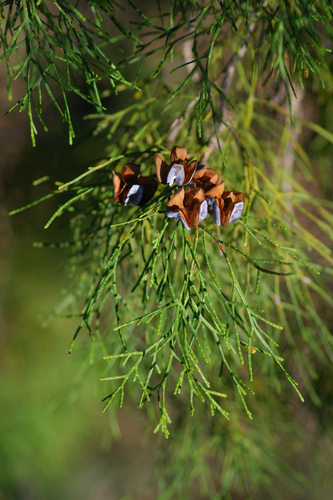
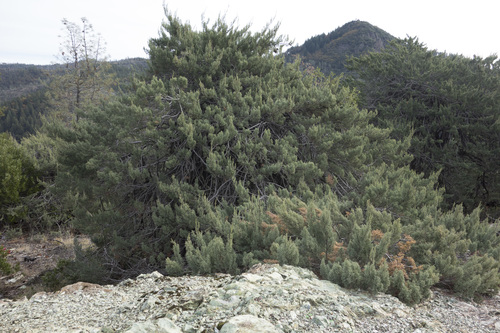
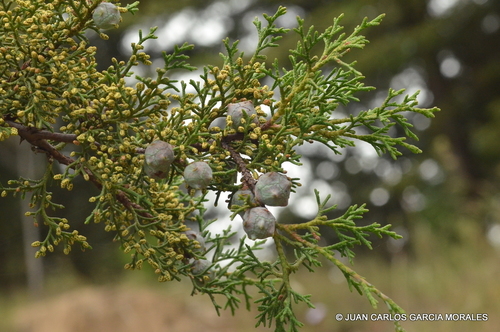
Hesperocyparis lusitanica, also known by the scientific name Cupressus lusitanica Mill., is an evergreen conifer tree. It grows to 40 meters tall and has a crown that ranges in shape from conic to ovoid-conic. Its foliage grows in dense sprays, and ranges in colour from dark green to somewhat yellow-green. The leaves are scale-like, 2 to 5 millimetres long, and grow on rounded, not flattened, shoots. Its seed cones are globose to oblong, 10 to 20 millimetres long, and have 4 to 10 scales. Seed cones start green, and mature to brown or grey-brown roughly 25 months after pollination. At maturity, cones may open to release seeds, or they can remain closed for several years. Cones only open after the parent tree is killed in a wildfire, which lets seeds colonize the bare ground exposed by the fire. Male cones are 3 to 4 millimetres long, and release pollen from late winter to early spring, which falls between February and March in the northern hemisphere. In most of its natural environment, more rainfall occurs during the summer. Hesperocyparis lusitanica is fast-growing and drought tolerant, but only slightly frost tolerant. It was introduced from Mexico to many other parts of the world, including New Zealand. It is widely cultivated as both an ornamental tree and for timber production across warm, temperate, and subtropical regions worldwide. No trees from northern Mexico populations, which have strong drought endurance, have been selected for cultivation.