About Cupressus bakeri Jeps.
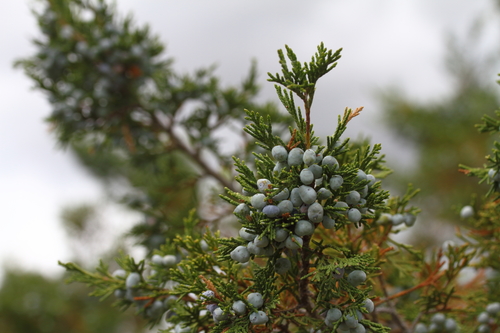
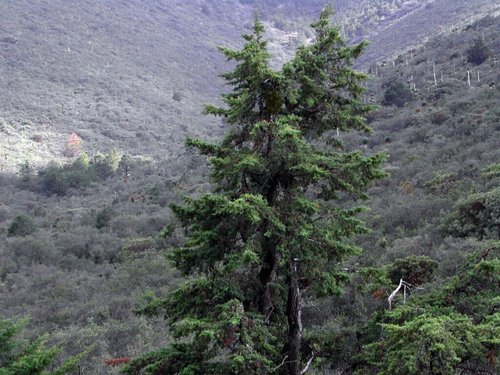
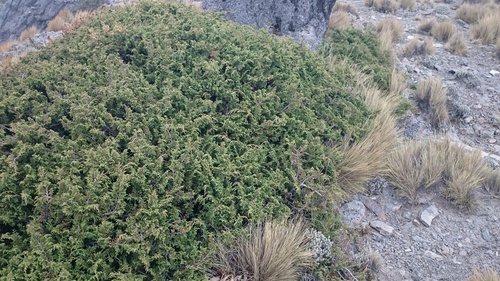
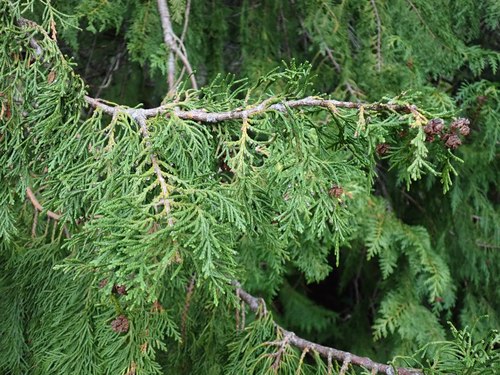
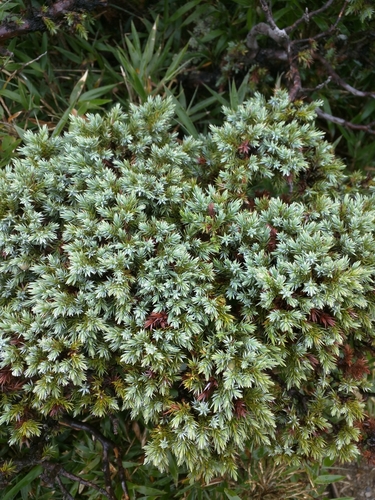
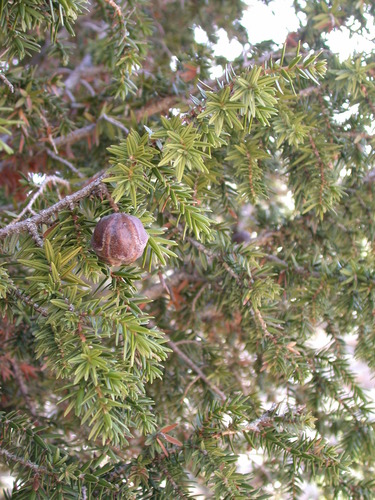
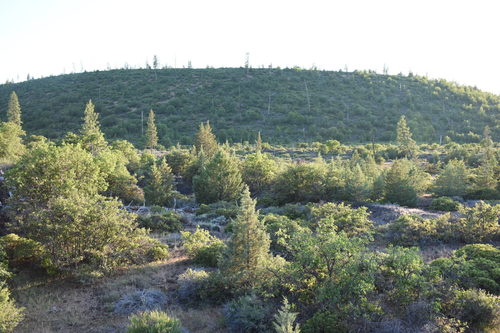
Cupressus bakeri Jeps. is an evergreen tree with a conic crown. It typically grows 9–25 meters (30–82 ft) tall, and can exceptionally reach 39 m (130 ft) in height. Its trunk diameter reaches up to 50 centimeters (20 inches), and can exceptionally reach 1 m (40 in). The bark is thin; it is red when young, and turns gray when the tree reaches maturity. Foliage grows in sparse, very fragrant, usually pendulous sprays, and ranges in color from dull gray-green to glaucous blue-green. Leaves are scale-like, 2–5 millimeters long, and grow on rounded (not flattened) shoots. Seed cones are globose to oblong, covered in warty resin glands, and are 10–25 mm (3⁄8–1 in) long. They have 6 or 8 scales, rarely 4 or 10, and start out green to brown, maturing to gray or gray-brown approximately 20–24 months after pollination. Male cones are 3–5 mm long, and release pollen between February and March. This species occurs in limited populations in Josephine and Jackson counties, southwestern Oregon, and in larger but still concentrated populations across a small section of Northern California, spanning Siskiyou, Modoc, Shasta, Plumas and Tehama counties. It is likely the northernmost cypress species. It is usually found in small, scattered populations rather than large contiguous forests, growing at altitudes of 900–2,000 m (3,000–6,600 ft). Its documented growing locations include the Modoc Plateau, southern Cascade Range, Klamath Mountains, and northern Sierra Nevada. In the wild, it grows slowly, and is mostly restricted to sites that are difficult for most plants to grow on, including serpentine soils and old lava flows. Its ability to tolerate these poor sites lets it avoid competition from much faster-growing tree species. It grows in chaparral and yellow pine forest habitats. The tree's thin bark makes it susceptible to wildfire, but wildfire exposure is required to release its seeds; after a fire, the seeds colonize the scorched earth left behind. Past decades of fire suppression policies have severely limited this species' reproduction. It is currently listed as a vulnerable species on the IUCN Red List.