About Cupressus arizonica Greene
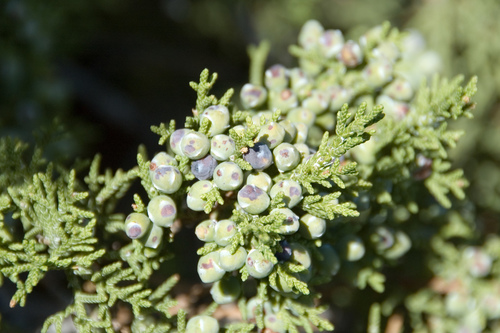
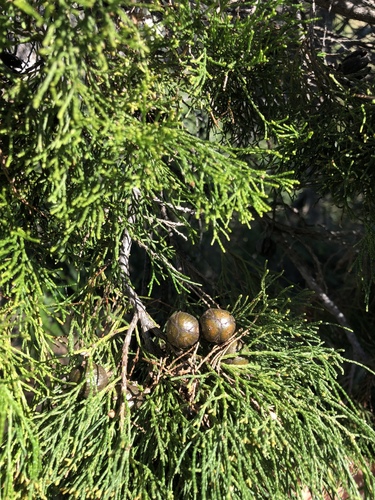
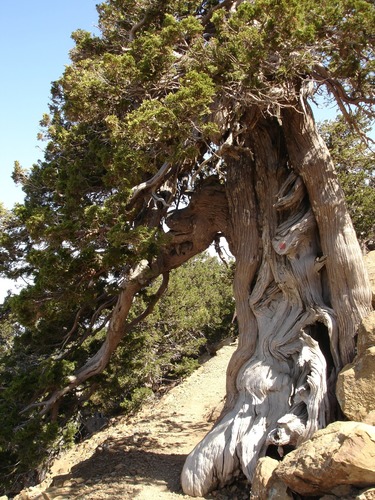
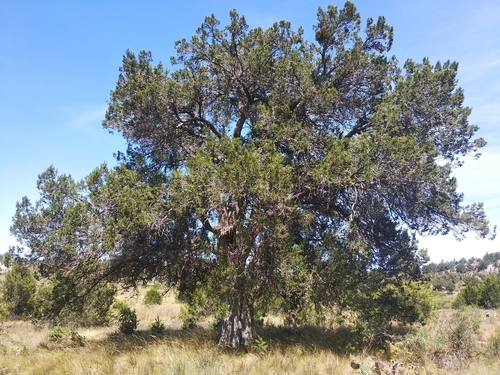
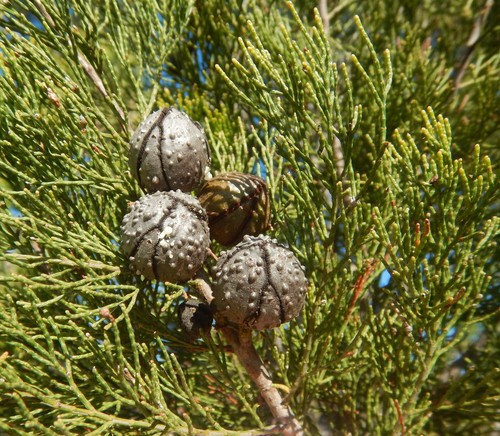
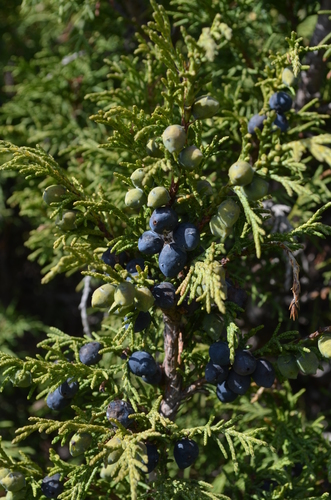
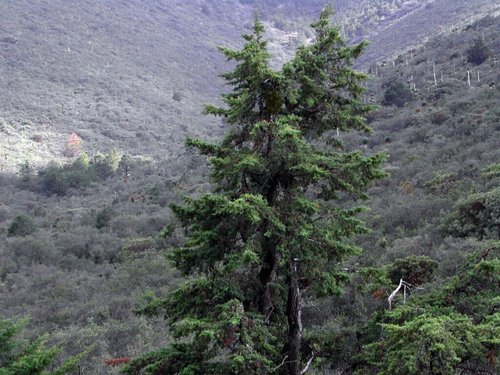
Hesperocyparis arizonica (also known by the scientific name Cupressus arizonica Greene) is a coniferous evergreen tree with a conic to ovoid-conic crown. It reaches heights of 10–25 m (33–82 ft), with a trunk diameter up to 55 cm (22 in). Its foliage grows in dense sprays, and ranges in color from dull gray-green to bright glaucous blue-green. The leaves are scale-like, 2–5 mm long, and grow on rounded (not flattened) shoots. The seed cones are globose to oblong, 15–33 mm long, with 6 or 8 scales, rarely 4 or 10. They start out green, and mature to gray or gray-brown about 20–24 months after pollination. These cones stay closed for many years, and only open after the branch they grow on is killed, such as during a wildfire, which lets seeds colonize the bare ground exposed by the fire. Male cones are 3–5 mm long, and release pollen from February to March. Hesperocyparis arizonica occurs mainly in northern Mexico, in the states of Chihuahua, Coahuila, Durango, Tamaulipas, and Zacatecas. It is also found in small areas of the southwestern United States, in the southern parts of Arizona, New Mexico, and Texas. In the United States, it grows at elevations between 1,000–1,500 m (3,000–5,000 ft), while in some Mexican forests it can grow as high as 2,200 m (7,200 ft). In the wild, this species is most often found in small, scattered populations, rather than in large continuous forests. One documented location is the Sierra Juárez and San Pedro Mártir pine–oak forests of Mexico, where it grows alongside canyon live oak and California fan palm. Arizona cypress is widely cultivated as an ornamental tree. Unlike Monterey cypress, it is highly resistant to cypress canker, a disease caused by the fungus Seiridium cardinale, and grows reliably in areas where this disease is common. The cultivar 'Pyramidalis' has received the Royal Horticultural Society's Award of Garden Merit, a status confirmed in 2017.