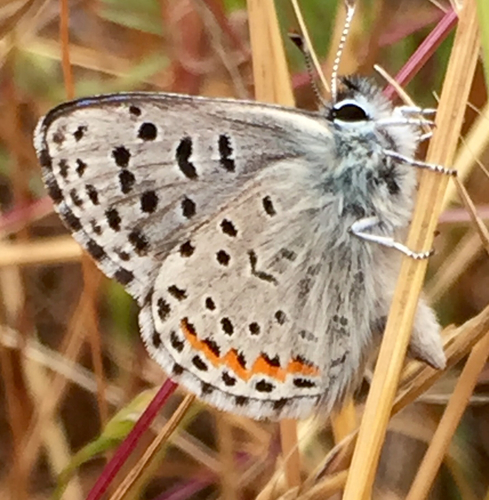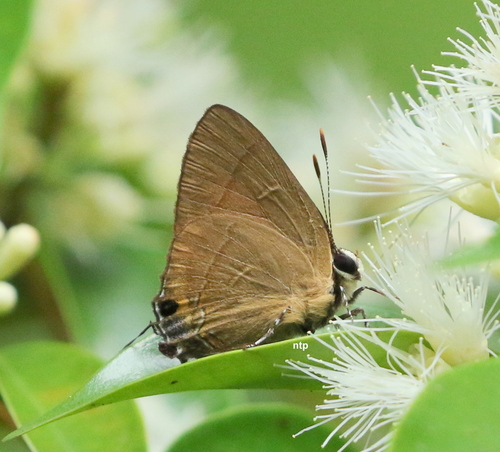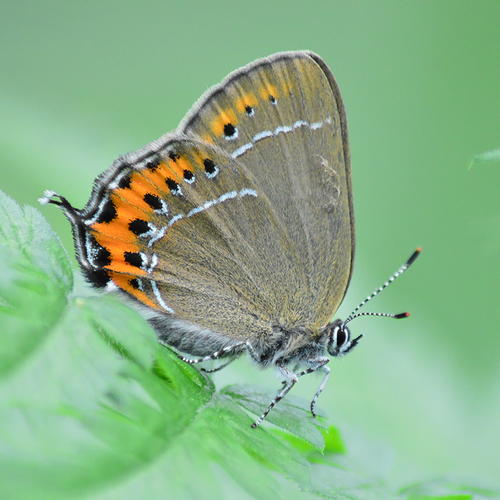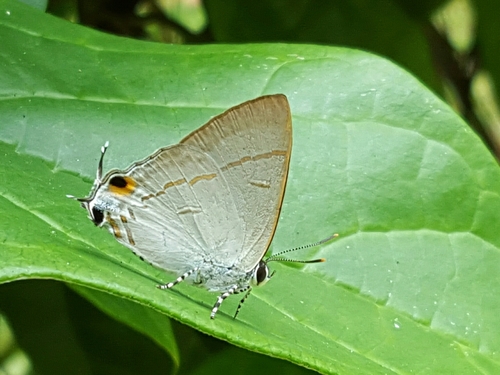
About Cupido lorquinii (Herrich-Schäffer, 1850)
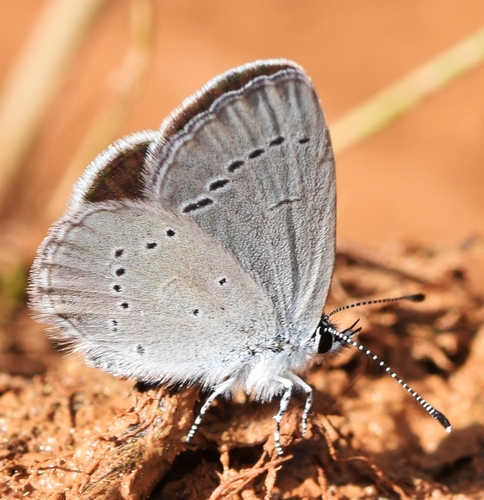
Scientific name: Cupido lorquinii (Herrich-Schäffer, 1850). This description originates from Seitz. Cupido lorquinii (labeled 82 d) strongly resembles Cupido minimus, and was previously classified as a form of that species. Butler noted consistent differences between the two species: in C. lorquinii, the upper wing bases are dusted with purplish violet, rather than the blue-green dusting found on C. minimus. The ocelli on the underside of C. lorquinii’s wings are arranged differently, with a much more regular and evenly curved submarginal row. C. lorquinii occurs in southern France, Spain, and the adjacent regions of North Africa. A very large form of C. lorquinii, matching or exceeding the size of Lycaena sebrus, was described from Central Asia: this form, buddhista Alph. from the Tian-shan, is now recognized as the full species Cupido buddhista (Alphéraky, 1881). Images of Cupido lorquinii are held at the Consortium for the Barcode of Life.