About Cuphophyllus flavipes (Britzelm.) Bon
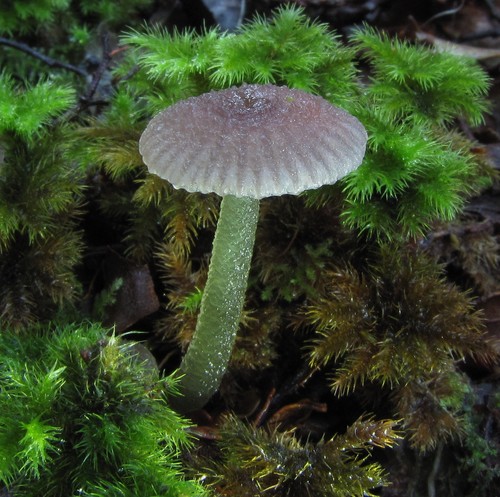
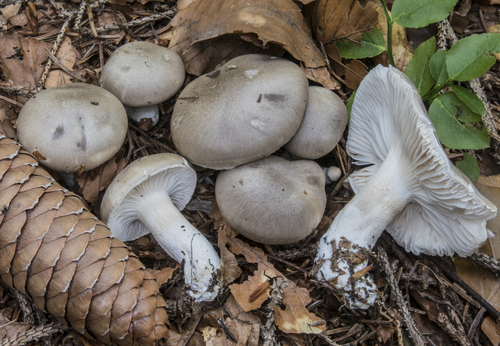
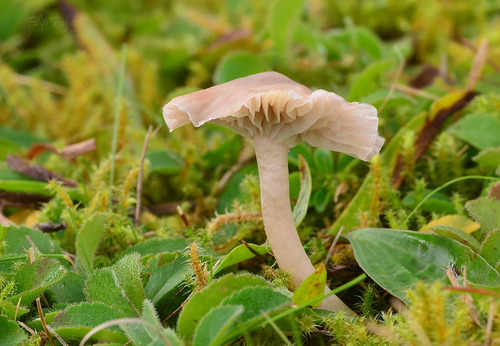
Cuphophyllus flavipes, commonly called the yellow foot waxcap, produces agaricoid basidiocarps that grow up to 60 mm (3 in) tall. When expanded, the cap ranges from broadly conical to flat or slightly depressed, and reaches up to 40 mm (2 in) across. The cap surface is smooth, slightly greasy when damp, and coloured grey to brownish grey. The lamellae (gills) are waxy, thick, and decurrent, running down the stipe; they range in colour from pale to dark grey. The stipe (stem) is smooth, pale greyish to white but yellow towards the base, and lacks a ring. The spore print of this species is white. Under a microscope, the spores are smooth, inamyloid, and ellipsoid, measuring about 6 to 7.5 by 5 to 6 μm. This species is widespread but uncommon across all of Europe. Like most other European waxcaps, Cuphophyllus flavipes grows in old, agriculturally unimproved, short-sward grassland such as pastures and lawns. Recent research indicates that waxcaps are neither mycorrhizal nor saprotrophic, and they may be associated with mosses.