About Cunninghamia lanceolata (Lamb.) Hook.
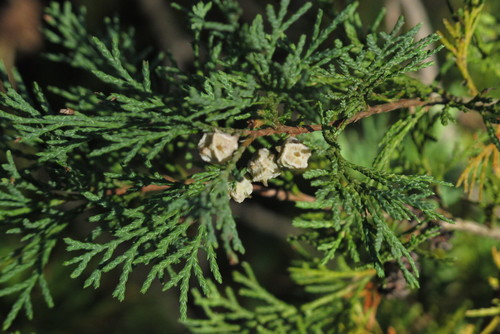
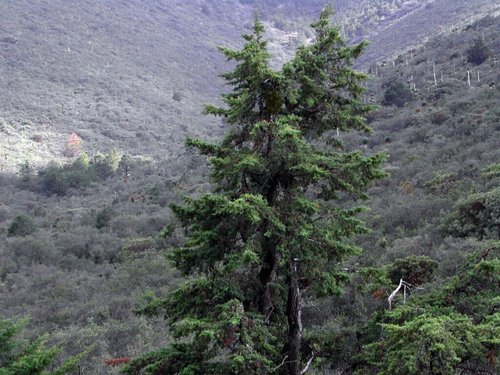
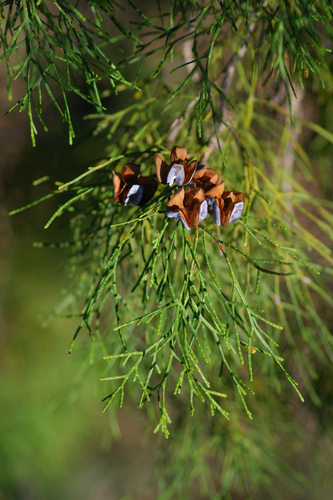
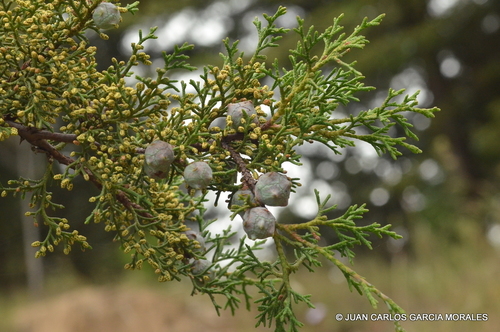
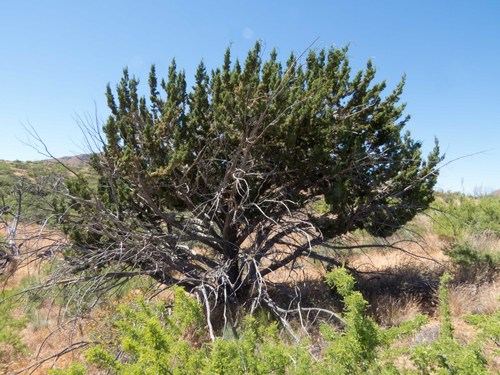
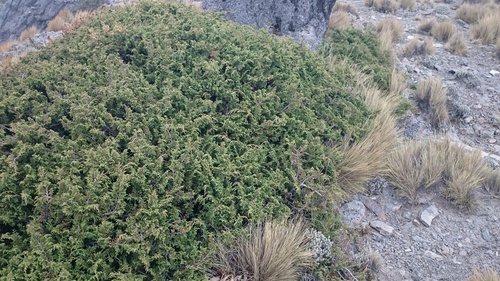
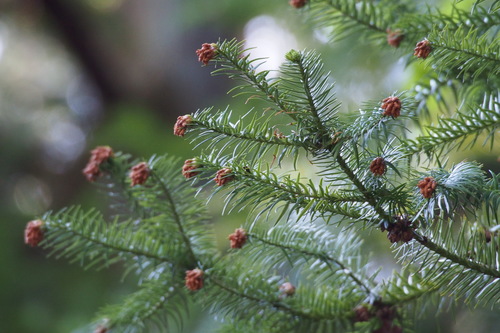
Cunninghamia lanceolata, commonly called Chinese fir, is a tall conifer species. In mild climates and its native Chinese forests, it can reach heights up to 150 feet (46 meters). When cultivated in Chinese forests, it typically grows to between 30 and 70 feet (9.1 to 21.3 meters), while in North America it usually reaches 30 to 50 feet (9.1 to 15.2 meters). Young trees develop a pyramidal-shaped crown; as the tree matures, the crown opens and spaces out, and its branches become more pendulous. The bark is typically colored from dark gray to dark brown. Its foliage has green, lanceolate leaves arranged in a spiral pattern. Male cones grow in clusters of 10 to 30, while female cones grow in clusters of 2 to 3. Seed cones are small and nearly unnoticeable right after pollination, and reach maturity 7 months after pollination, when they measure 1 to 1.8 inches (2.5 to 4.6 centimeters) in length. This species is naturally distributed across central China stretching to the East Coast of China, including the regions of Fujian, Guangdong, Guangxi, Guizhou, Hubei, Hunan, Jiangxi, Sichuan, Yunnan, and Zhejiang. Roughly 30 percent of all timber plantations in China are made up of C. lanceolata, covering an estimated 9 million hectares, mostly in southern China. This species accounts for around 25 percent of all commercial timber production in China. Over the past 70 years, the total area of C. lanceolata plantations has tripled, driven by widespread planting and reforestation efforts. C. lanceolata is also used for carbon sequestration. When managed through near natural forest management (NNFM), the tree’s soils can sequester carbon to help combat climate change. NNFM-driven carbon sequestration increases soil carbon stocks with help from litter decomposition in the topsoil. A horticultural variety, Cunninghamia lanceolata 'Glauca' (blue China fir), is distinguished by its blueish foliage. It has a similar growth habit to the species, with the added trait of better winter hardiness. There are no known major pests or diseases of significant concern for C. lanceolata. Brown foliage near the tree bole occurs because the tree retains dead needles for several years as autumn approaches.