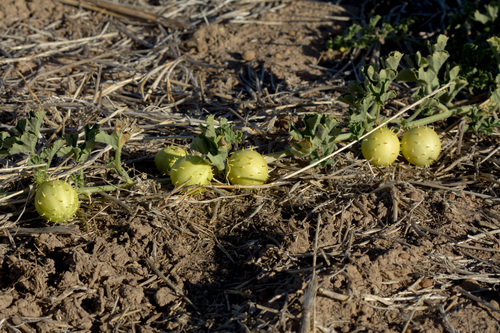
About Cucumis melo L.
Cucumis melo, commonly called melon, is a species in the genus Cucumis that has been developed into many cultivated varieties. Its fruit is classified as a pepo. The flesh of the fruit can be either sweet or bland, may have an aroma or be scentless, and the rind can have different textures: smooth (for example, honeydew), ribbed (for example, European cantaloupe), wrinkled (for example, Casaba melon), or netted (for example, American cantaloupe). This species is sometimes referred to as muskmelon, but there is no consensus on how this term should be used. It can either refer specifically to the musky, netted-rind American cantaloupe, or be used as a general term for any sweet-flesh melon variety, including the inodorous smooth-rind honeydew melon. The origin of melons is not confirmed. Research shows that seeds and rootstocks of melons were traded along caravan routes in the Ancient World. Some botanists think melons are native to the Levant and Egypt, while others place their origin in Iran, India or Central Asia. A third group of botanists supports an African origin, and wild melons still grow in some African countries in modern times. Besides being eaten fresh, melons are sometimes dried. Some other varieties are cooked, or grown for their seeds, which are processed to make melon oil. There are also varieties that are grown only for their pleasant fragrance. The Japanese liqueur Midori is flavored with melon. It was once commonly cultivated in Tonga, where it is called katiu, used as a snack and with its flowers used for leis, but the species has since been extirpated there.