About Cucullia umbratica (Linnaeus, 1758)
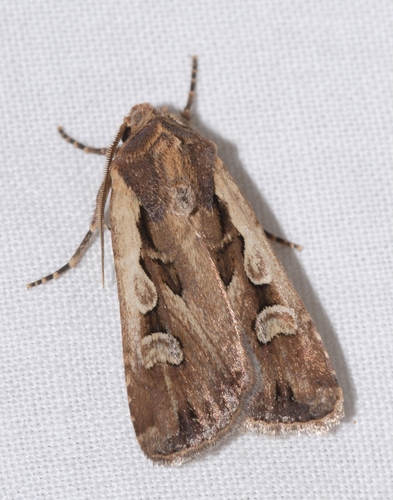
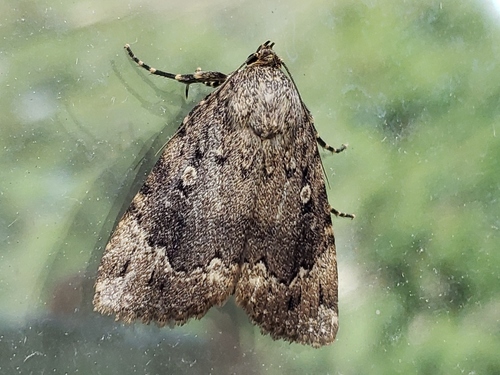
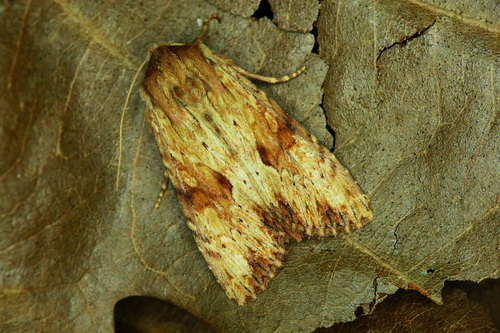
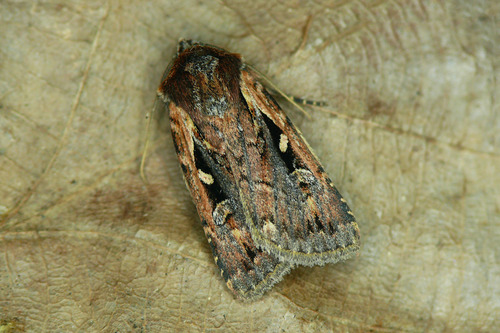
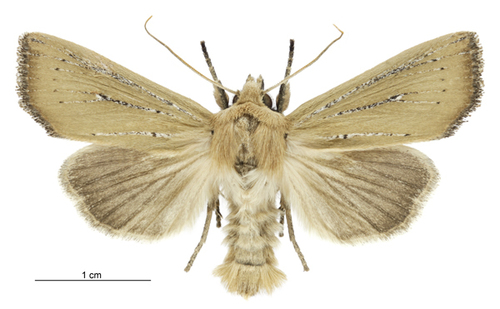
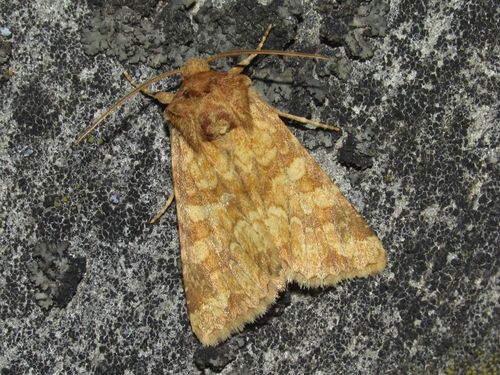
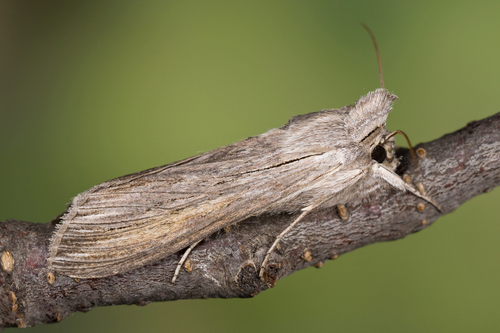
Cucullia umbratica (Linnaeus, 1758) is a fairly large moth species, with a wingspan ranging from 52 to 59 millimetres (2.0 to 2.3 inches). These moths have long, narrow wings that give them a streamlined appearance. Their forewings are dull brownish grey; the cell and the space beyond the cell are paler, with a dull greyish buff tone. A fine black line runs from the base below the cell. The typical wing lines and stigmata are poorly defined. The orbicular stigma is marked by two or three dark points, while the reniform stigma is marked by a curved black line at its lower end. Slight black dashes occur before the termen, above vein 3 and below vein 2, and a longer black streak appears above the middle of vein 4. Male hindwings are white, with veins and the termen narrowly coloured fuscous; female hindwings are entirely brown, with a paler base. The larva is grey or brown with black spots. This species is very similar to the chamomile shark (Cucullia chamomillae), but can be distinguished by the number of bands on the hindwing fringe: Cucullia umbratica has two bands (one pale and one grey), while Cucullia chamomillae has three. This species is widespread across much of the Palearctic realm, including Europe, Russia, Afghanistan, Turkestan, and Mongolia. It has recently also been reported from North America, specifically from the Magdalen Islands in Canada. These moths live in a variety of open habitats including heaths, meadows, forest edges, gardens, parks, and suburban areas.