About Cucullia absinthii (Linnaeus, 1761)
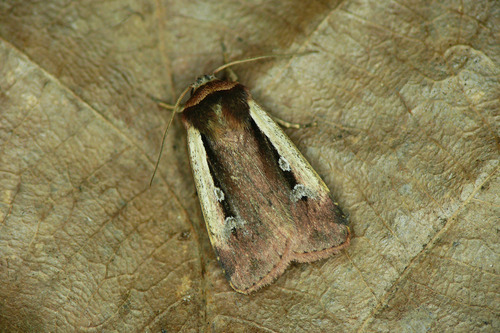
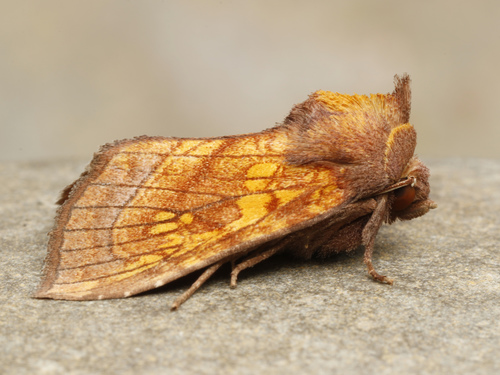
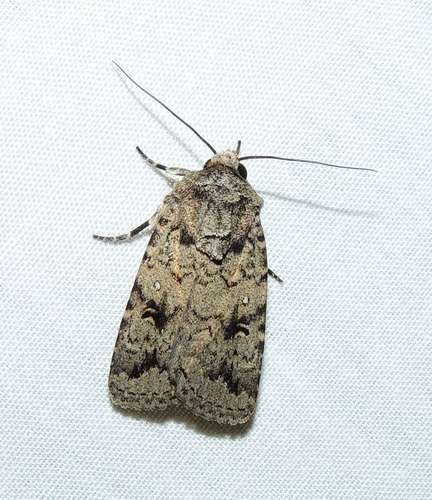
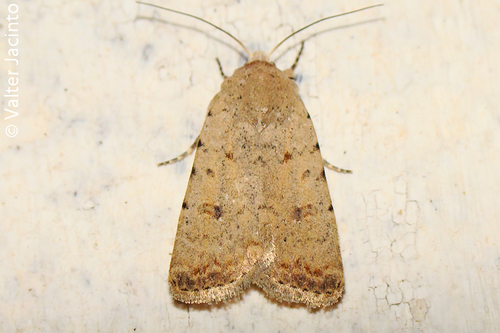
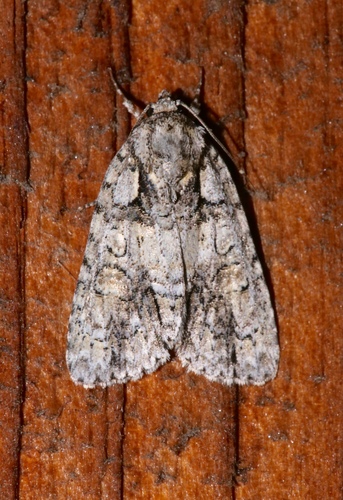
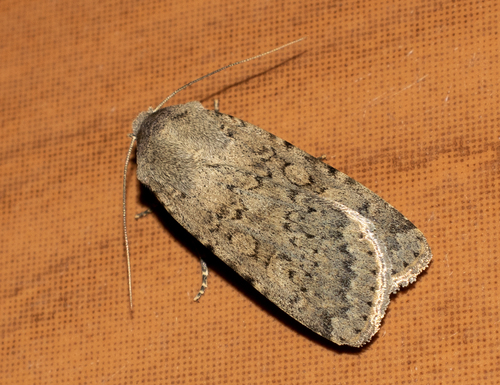
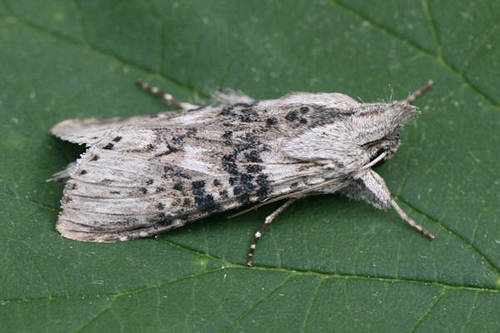
This is a description of Cucullia absinthii, first described by Linnaeus in 1761. The species has a wingspan of 32–40 mm. Its forewing is long and narrow with a pointed apex. The abdomen is elongated, particularly in males, which have lengthened anal tufts. The forewing is grey with distinct darker markings. The inner line is angled outwards, with broadly black edges. A black streak extends from the base below the cell. The outer line is only distinct above the inner margin, and is preceded by a black blotch on the submedian fold. Veins are black before the termen, with short black dashes below veins 5 and 2. The orbicular and reniform stigmata are marked by black spots, and a black blotch runs from the costa between these two stigmata. The terminal area of the forewing is uniformly grey. The hindwing is dull whitish, becoming fuscous before the termen. The larva is naked except for a few short bristles, greenish with reddish-brown spots. It is distinctly narrowed between body segments, so that it resembles a pearl necklace.