About Cryptaspasma querula (Meyrick, 1912)
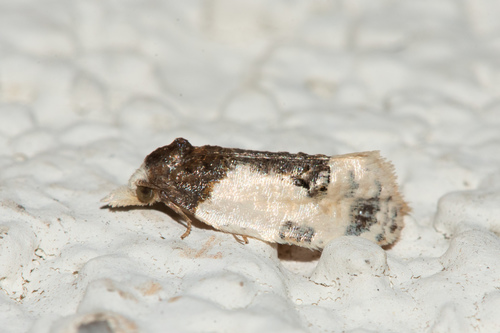
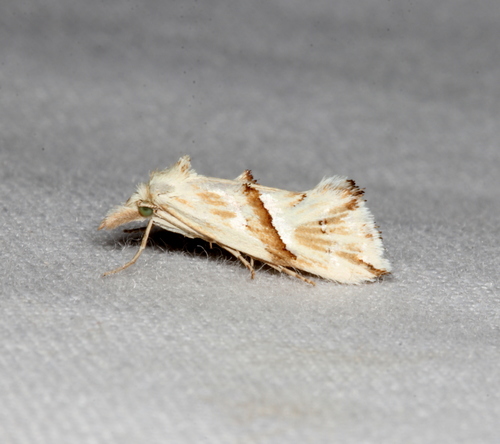
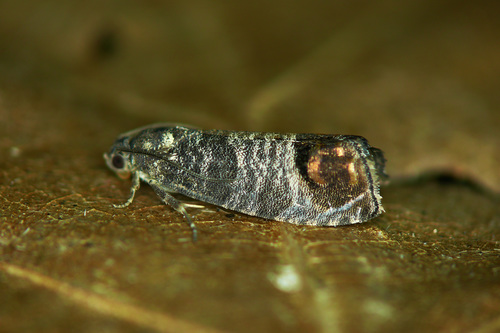
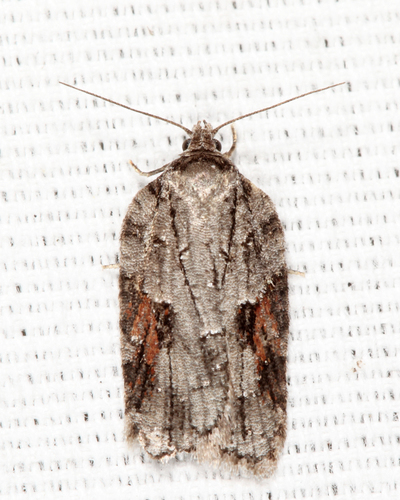
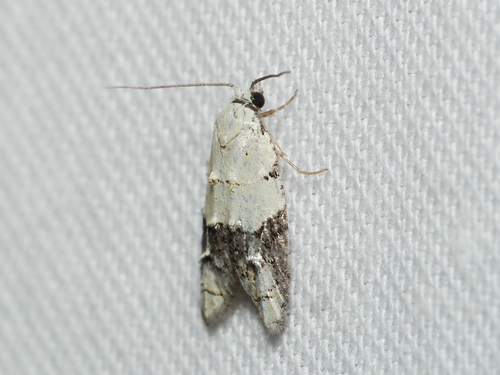
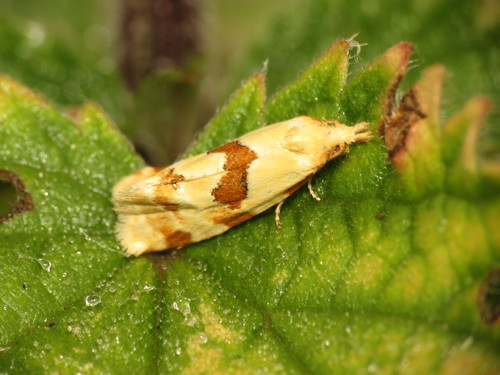
When first describing this species, Meyrick characterized adult Cryptaspasma querula as follows: Males and females measure 21–28 mm. The head, palpi, and thorax are dark fuscous. The abdomen is fuscous and not hairy. Forewings are elongate-triangular, with a gently arched costa; males have a very short and narrow basal fold on the costa. The forewing apex is obtuse, and the termen is rounded and rather oblique. Forewings are purplish-bronzy-fuscous, suffusedly mixed and strigulated with dark fuscous. The posterior two-thirds of the costa has obscure pale strigulae. There is a whitish or ochreous-whitish dot in the disc at two-thirds the length of the wing. Between this dot and the termen are two or three variable curved transverse series of small dark-fuscous spots or dots. Forewing cilia are fuscous, with a darker line near the base. Hindwings are fuscous, and are sometimes faintly darker-strigulated towards the posterior end. Males have no special distinguishing characters on the hindwings. Hindwing cilia are pale fuscous. Adult C. querula are variable in both size and the appearance of yellow markings on their wings. Females tend to be more plainly colored than males. This species is endemic to New Zealand, and can be found throughout the country. It inhabits native podocarp and broadleaf forest. The larvae feed on the fleshy cotyledons of Beilschmiedia tawa seeds, as well as the endosperm of fruits of B. tawa, tarairi, and miro trees. Larvae of this species have also been raised in captivity on common oak. The larvae are a common food source for Mus musculus.