About Crowea exalata F.Muell.
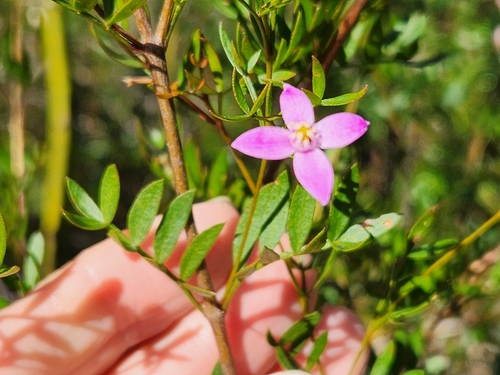
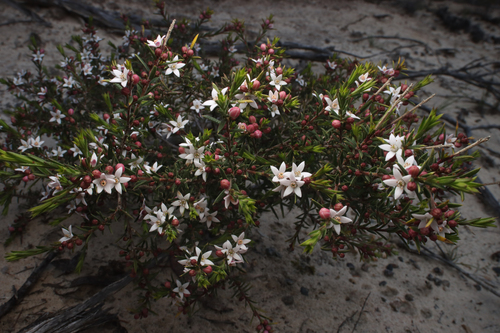
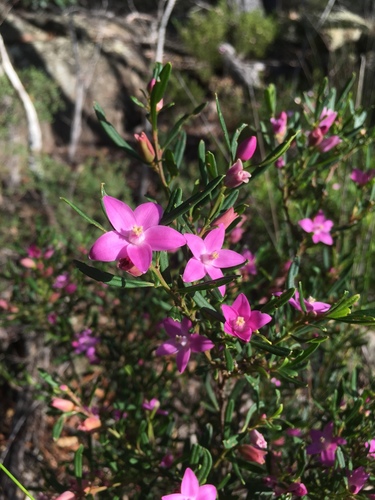
Crowea exalata is a small shrub that reaches about 1 metre (3 ft) in height, with thin branches that often spread to more than 1 metre (3 ft) across. Its leaves are narrow oblong to narrow egg-shaped, with the narrower end at the base, and measure 15–50 millimetres (0.6–2 in) long by 1–6 millimetres (0.04–0.2 in) wide. The leaves contain many oil glands and release a characteristic scent when crushed.
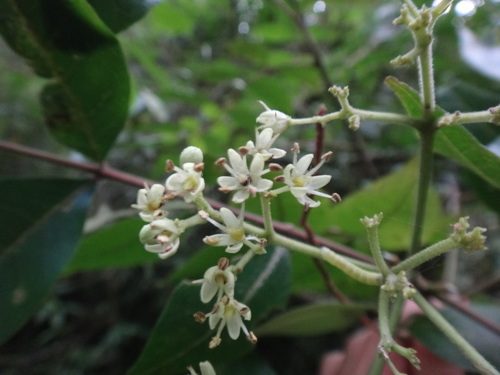
Star-shaped flowers grow on the ends of branches or in leaf axils, borne on a stalk 2–4 millimetres (0.08–0.2 in) long. The five petals are egg-shaped, around 10 millimetres (0.4 in) long, and are usually pink, sometimes white; cultivated varieties can produce a range of flower colours. The stamens at the centre of the flower almost overlap. Flowering occurs mainly from mid-summer to late winter, though flowers can appear throughout most of the year. After flowering, dry fruits develop that have 5 compartments, each opening to release 2 seeds.
This species, commonly called small crowea, is distributed in New South Wales, Victoria and south-east Queensland, where it grows on the east coast, adjacent ranges, and the slopes west of the ranges. It occurs in dry sclerophyll forest growing in sandy soil.
Crowea exalata is widely cultivated and is commonly sold at Australian native plant nurseries. It grows best in light soil with partial shade, and is an ideal plant for rockeries. It is a hardy species, particularly when grown in well-mulched soil with adequate water. Propagation is easier from cuttings, because seeds require nicking and soaking under running water for several weeks before sowing.