About Croton setiger Hook.
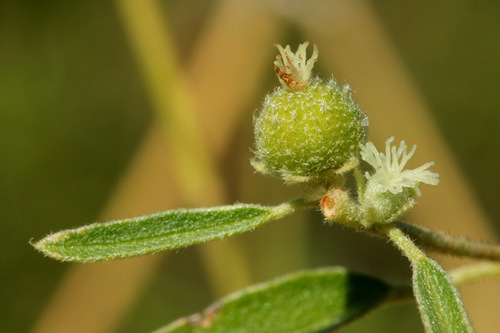
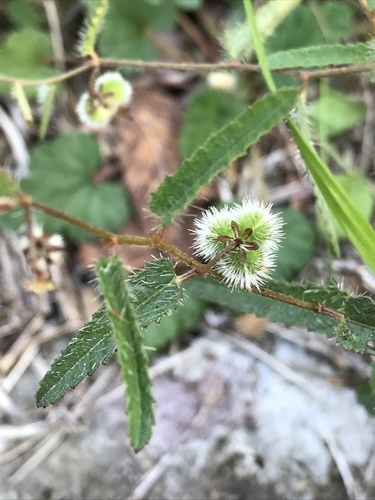
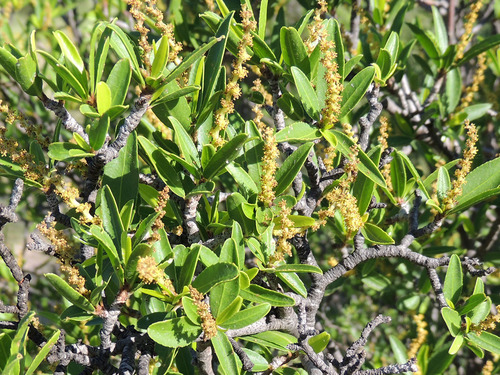
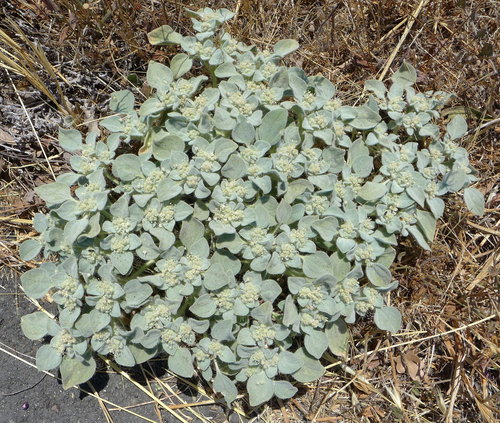
Croton setiger Hook. is a plant species with the common English names turkey mullein, dove weed, and fish locoweed. It should not be confused with Murdannia nudiflora, which is often called doveweed. This species is native to most of the western United States and northwest Mexico, and has become naturalized in other regions including parts of Australia and Central Chile. It is sometimes referred to by the alternative scientific spelling Croton setigerus, and was formerly classified under the name Eremocarpus setigerus. Croton setiger is a low-growing, squat plant with furry, felt-like, hexagon-shaped leaves that are pale pink-green in color. Its small green flowers are covered in soft bristles. This plant is grown as an ornamental, where its low rounded form fits well in potted arrangements. The foliage is toxic to animals. When crushed, the leaves produce a sweet odor that some people find unpleasant. Crushed plants of this species are called shä'um by the Pomo people and kē-chil' wä-ē-mök' by the Yuki people; both these Native American groups and later immigrants used crushed Croton setiger as a fish toxin to stupefy fish and make them easy to catch. Recorded by Chesnut, the Konkow (Maidu) people of northeastern Central California use this plant extensively for medicinal purposes, in addition to its use as a fish toxin. Chesnut also noted that the seeds are such a strong attractant for doves that Native Americans would use dense patches of "dove weed" to lure and catch large numbers of doves. Early Spanish settlers in the American Southwest knew of this plant's use as a fish toxin, and sometimes called it yerba del pescado, meaning "fishing herb" — one of multiple plants given this name. Despite the plant's toxicity to some animal species, its seeds are eaten by birds. Many of the plant's common names come from the preference doves and wild turkeys have for its seeds.