About Crotalaria cunninghamii R.Br.
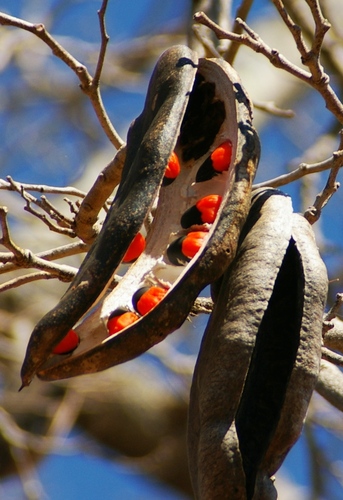
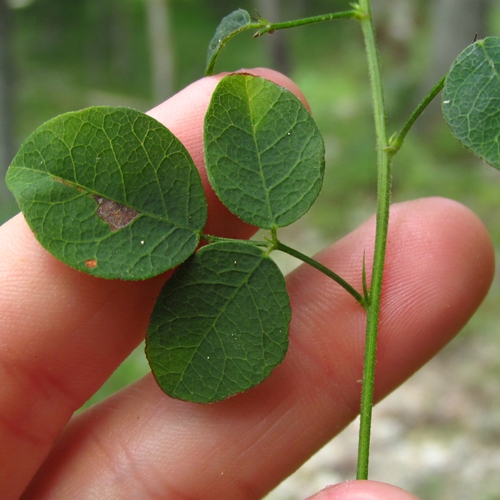
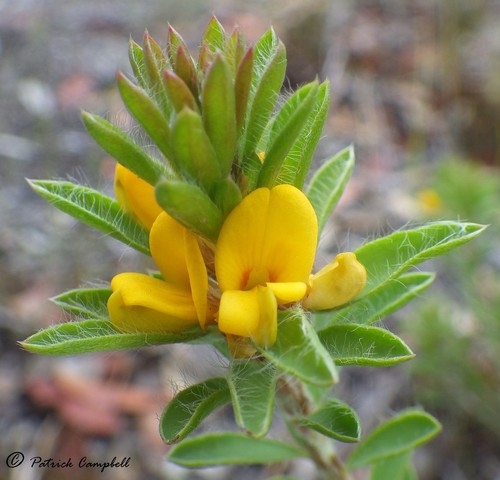
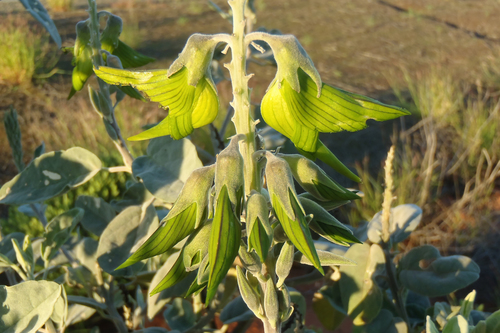
Crotalaria cunninghamii R.Br., commonly called the green birdflower, was first collected and identified by botanist Alan Cunningham during 19th-century expeditions to Australia. Cunningham arrived in Parramatta, Australia, in 1816 and immediately began exploring and documenting local plant species. After recovering from a severe fever he contracted during an 1817 expedition west of the Blue Mountains, Cunningham accepted an invitation to join a naval expedition to north-western Western Australia. During this seven-month 1817 trip, he collected over 300 plant species, including Crotalaria cunninghamii. Cunningham went on to join two more naval expeditions in subsequent years; his third voyage was nearly halted when his ship, the cutter Mermaid, developed a serious leak, but after the vessel was repaired quickly at Careening Bay, Cunningham was able to continue discovering hundreds more Australian plant species before returning to England. The green birdflower is a perennial shrub that reaches 1 to 3 meters in height. It has hairy or woolly branches and dull green foliage. Its oval leaves grow to around 30 millimeters long. Large greenish pea flowers marked with fine black lines grow on long spikes at the ends of branches, and these flowers strongly resemble a bird attached by its beak to the central stalk of the flowerhead. The plant produces club-shaped seed pods up to 50 millimeters long; the pods are also described as large, almost square, and covered in a soft, green, hairy outer layer. Crotalaria cunninghamii is non-allergenic. There is ongoing debate about the origin of the flower’s distinct bird-like shape: some argue the shape evolved through natural selection, either as Batesian mimicry to deter predators or to attract specific pollinators, while others argue the resemblance is purely accidental, and the perceived similarity to a bird is just human pareidolia. Michael Whitehead of the University of Melbourne notes that the flower’s shape, including its large size and long petal keel, matches traits typical of bird-pollinated plants, which aligns with the fact that the primary pollinators of Crotalaria cunninghamii are nectar-eating birds and bees. This same debate over the origin of animal-like flower shapes applies to other species such as the monkey orchid Dracula simia, which resembles a monkey, and the moth orchid Phalaenopsis, which resembles a moth. Crotalaria cunninghamii grows naturally in arid to semi-arid tropical zones of Australia, ranging across northern Western Australia, the Northern Territory, northern South Australia, and southwest Queensland. It grows most commonly in well-drained soils in shrubland, grassland, and savannah woodland, and is typically found on desert dunes, sandplains, and along drainage lines. It also occurs in arid-region Mulga communities, which are resource-rich arid hotspots that include desert water holes and cover 20 percent of Australia’s total arid land mass. Historically, Aboriginal Australians used Crotalaria cunninghamii for medicinal purposes. When processed by heating and boiling, the leaves can be used to treat eye infections, while the bark can be used to treat swelling of the limbs. The plant has also been historically proposed as a potential homeopathic remedy, though it is not widely used as a medicine today.