About Crocus sativus L.
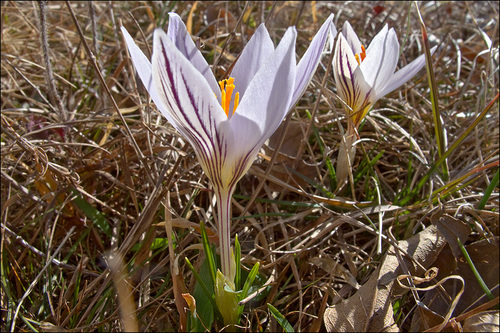
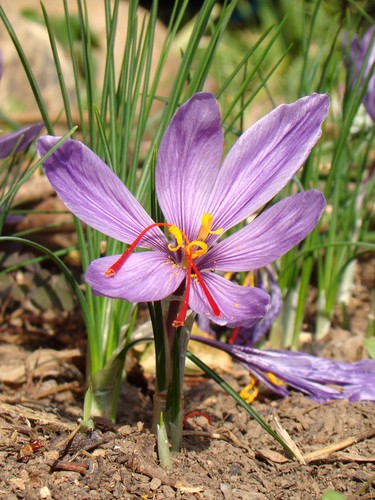
Crocus sativus L., commonly known as saffron crocus, is a perennial herb that reaches 10 to 30 centimeters in height. It grows from an underground corm that produces leaves, bracts, a bracteole, and a flowering stalk. It typically blooms in autumn, producing sterile purple flowers. Each flower has six petals and three stigmas that range in color from red to orange. Its leaves are simple, arranged in a rosulate pattern, and have smooth entire margins. The dried stigmas of this plant are the source of the culinary spice saffron. In addition to its culinary use, saffron is used for health purposes, especially in traditional Asian medicine. Saffron contains a variety of biologically active chemical compounds, including alkaloids, anthocyanins, carotenoids, flavonoids, phenolics, saponins, and terpenoids, and is reported to produce mood-enhancing effects, including for people living with major depressive disorder. Producing approximately one pound of saffron requires between 50,000 and 75,000 individual Crocus sativus plants, a yield limited by the fact that each corm produces only one or two flowers, and each flower produces only three stigmas. Stigmas should be harvested mid-morning once the flowers have fully opened. Saffron crocus is also grown as an ornamental plant. As a sterile triploid, Crocus sativus does not exist in the wild, and depends on manual vegetative multiplication to propagate. All cultivated C. sativus plants are clones originating from a single domestication event, resulting in very low genetic diversity. This low diversity makes it difficult to develop cultivars with new beneficial traits, or to combine these beneficial traits through conventional breeding. Despite this limitation, saffron cultivars are produced through several methods. The first method is traditional clonal selection: any plant that develops a desirable mutation is kept and grown out to produce a new cultivar. The second method is mutation breeding: mutagenesis is used to generate a wide range of new mutations for selection, after which the traditional clonal selection process is followed. The third method leverages sexual reproduction, which is much easier for breeding desirable traits when working with fertile plants. While C. sativus itself is not self-fertile, successful cross-pollination between some of its wild relatives and saffron pollen can be done in vitro to produce seeds. This process creates fertile diploid plants that carry genomic material from C. sativus, allowing breeders to explore new traits through further cross-pollination. Chromosome doubling could theoretically also create a fertile hexaploid C. sativus plant, and this change can be induced using colchicine. Saffron crocus corms should be planted 10 centimeters (4 inches) apart in a 10-centimeter (4-inch) deep trough. The plant grows best in full sun locations, in well-drained soil with a moderate organic content. Corms multiply each year, and each individual corm lives for 3 to 5 years.