About Crocidolomia pavonana (Fabricius, 1794)
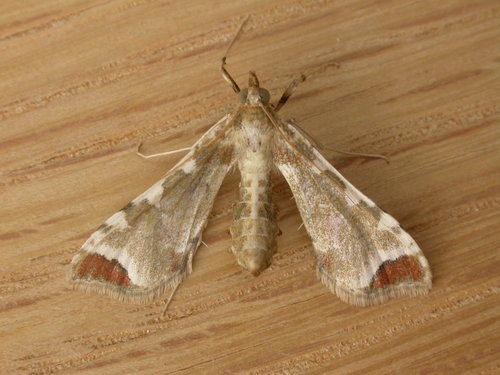
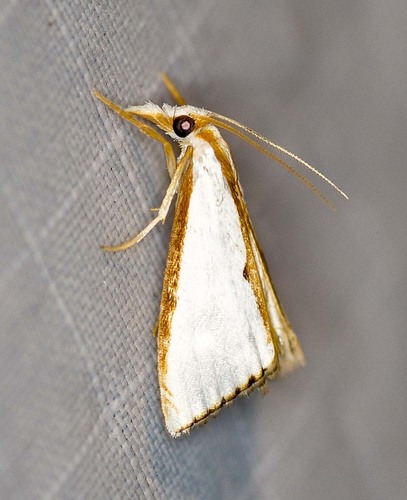
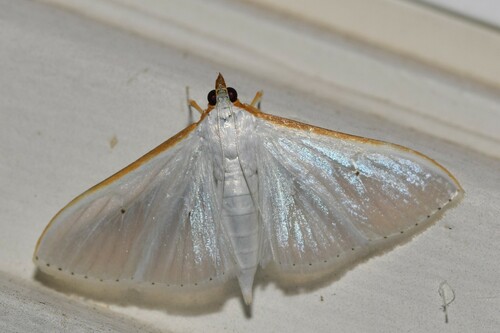
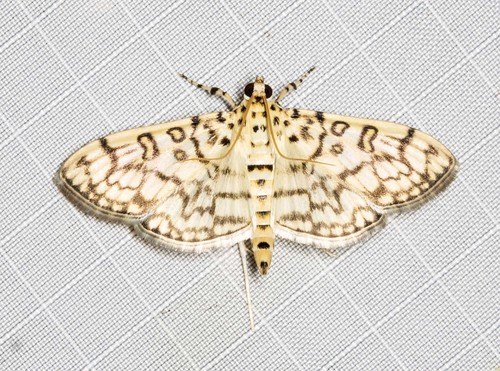
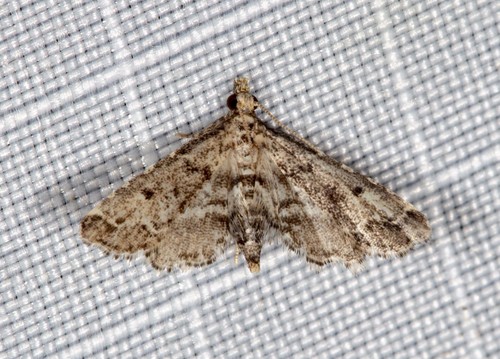
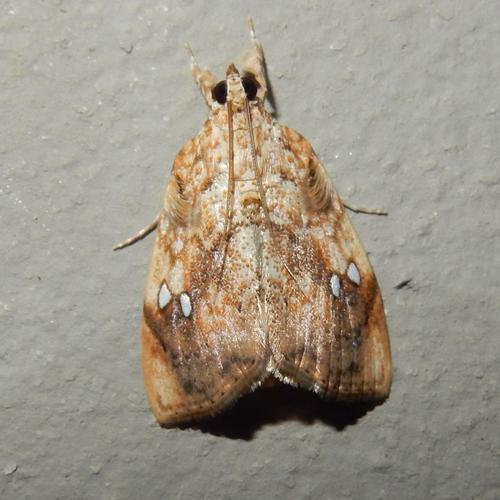
The adult male of Crocidolomia pavonana measures 11 to 14 mm (0.43 to 0.55 in) in body length, with a wingspan of 20 to 25 mm (0.8 to 1.0 in); the adult female is slightly smaller. Both sexes show considerable variation in colouration, but all individuals have brownish markings set against a cream-coloured background. Males can be distinguished by the presence of tufts of dark-coloured hairs at the front of their forewings. Eggs are pale green, and up to three hundred are laid in an overlapping pile that can reach 5 mm (0.2 in) in diameter. Newly hatched larvae are grey with dark heads; as they develop, they become green with dark heads and five fine pale yellow longitudinal stripes. The pupa is cylindrical, and ranges in colour from olive green to light brown, darkening shortly before the adult moth emerges. The pupa is enclosed within a silken cocoon. Crocidolomia pavonana occurs in tropical and subtropical regions across Africa, Asia, and Australia. Its range extends from South Africa and Madagascar, through India, Thailand, Taiwan, Indonesia, and the Philippines, to northern Australia. Larvae feed on a range of host plants, including the brassicaceous species Brassica oleracea and Brassica rapa and their varieties, as well as cotton (Gossypium), pigeon pea (Cajanus cajan), Gynandropsis, nasturtium (Tropaeolum), and radish (Raphanus). Tests conducted in Uganda tested oviposition preference across six brassicaceous crops: white cabbage, broccoli, cauliflower, kale, Chinese cabbage, and Indian mustard. The moth was found to prefer laying eggs on Chinese cabbage and broccoli. When given a choice between Chinese cabbage and white cabbage, egg laying on white cabbage was reduced by between 69% and 100%. Several parasitoids are known to attack the larvae of this moth across different parts of its range. These parasitoids include braconid wasps and tachinid flies. In India, larvae are also preyed on by a predatory bug belonging to the family Pentatomidae.