About Crithagra sulphurata (Linnaeus, 1766)
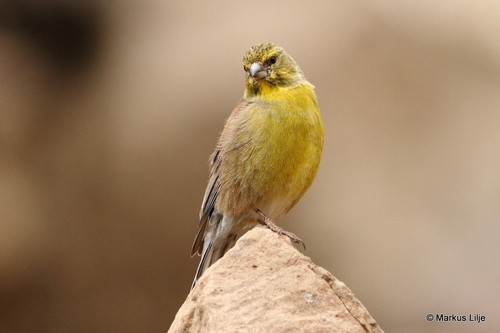
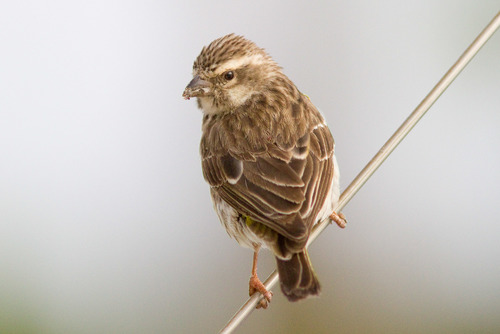
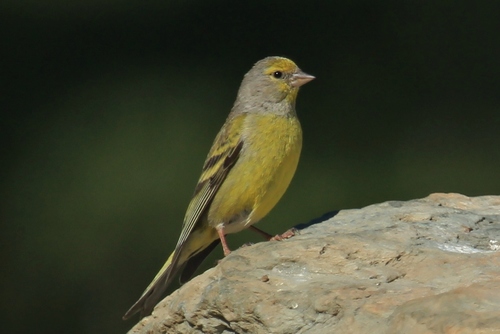
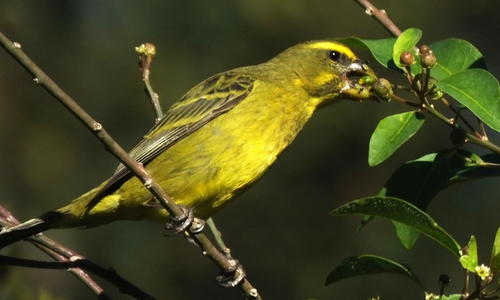
The brimstone canary, scientific name Crithagra sulphurata (Linnaeus, 1766), measures 15–16 cm in length. It has a heavy, short, conical bill that is very stout at the base; the bill is light brown, with a pinkish or yellowish base. Its legs and feet are pinkish-brown. It has yellow-green upper parts marked with dark green streaking, plus yellow-green ear coverts, a yellow-green malar stripe, and two yellow wing bars. Its underparts are yellow, with a greenish wash on the flanks and breast. The sexes have similar overall appearance, but the male is brighter, has a larger bill, a better-defined face pattern, brighter yellow wing bars, and a greenish rump. Young birds are duller, greyer, and have less yellow color on their underparts than adult brimstone canaries. The balance of green versus yellow plumage varies considerably across the species' range; southern birds are greener than northern birds, and this difference holds even within subspecies, most notably in C. s. sharpii. For an overview of finch phylogeny that includes canaries, see the entry on finches. The brimstone canary can be confused with the yellow-fronted canary. However, the yellow-fronted canary has a smaller bill, a much more defined head pattern, and a bright yellow rump. The yellow canary, which shares an overlapping range with the brimstone canary, is another species that is often confused with it. In the southern part of the brimstone canary's range, its call notes are a trilled, deeply pitched swirriwirrit or chirrup. Its song is a jumble of chirps, whistles, warbles and trills, sung at the same deep pitch as its call. Northern brimstone canaries have a faster, higher, less jumbled and more tuneful version of the song.