About Crioceris asparagi (Linnaeus, 1758)
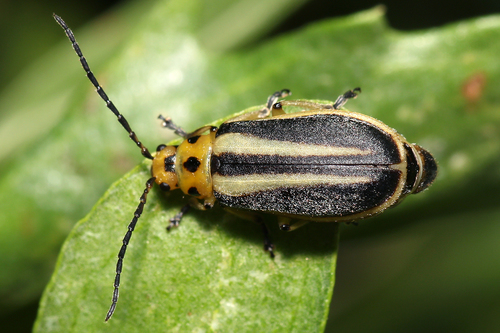
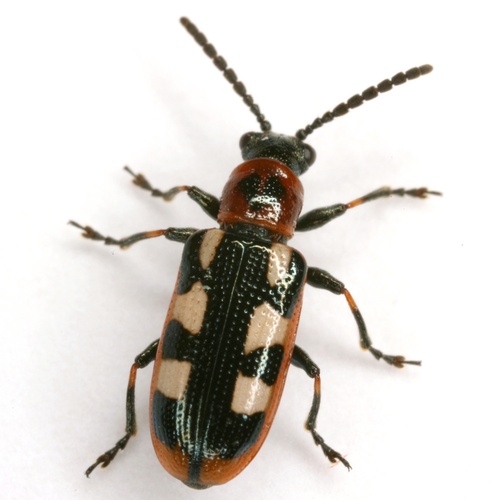
The common asparagus beetle, scientifically known as Crioceris asparagi, is a major pest of asparagus crops in both Europe and North America. Asparagus is the only food plant for this species. Adult common asparagus beetles measure 6.0 mm to 9.5 mm in length, with a slightly elongated body shape. They have a metallic blue-black coloration, with cream or yellow spots on their elytra, which are edged in red. The larvae are plump gray grubs with dark-colored heads. Both adult beetles and their larvae strip the needle-like leaves from asparagus fronds. This removes the plant’s ability to perform photosynthesis and store energy for subsequent growing years. In addition to damaging foliage, the beetles chew asparagus spears and lay large numbers of eggs directly on the spears, making the entire crop unfit for use or sale. After feeding on asparagus plants for a few weeks, the larvae drop to the ground to pupate. A single year can support two or three generations of common asparagus beetle. Adult beetles spend the winter in a dormant state, either underground or in nearby leaf litter. The parasitic wasp Tetrastichus coeruleus, which is found mainly in the United States and Europe, can cause up to 71% mortality of common asparagus beetles in field conditions, and has been successfully used for biological control of this pest. Multiple types of insecticides, including carbamates, pyrethroids, spinetoram, and spinosad, are also options to consider for controlling common asparagus beetle infestations. The closely related spotted asparagus beetle, Crioceris duodecimpunctata, is also a pest as an adult, when it feeds on tender asparagus shoots and leaves. However, it is not considered as damaging a pest as the common asparagus beetle, because spotted asparagus beetle larvae feed only on asparagus berries.