About Crinum macowanii Baker
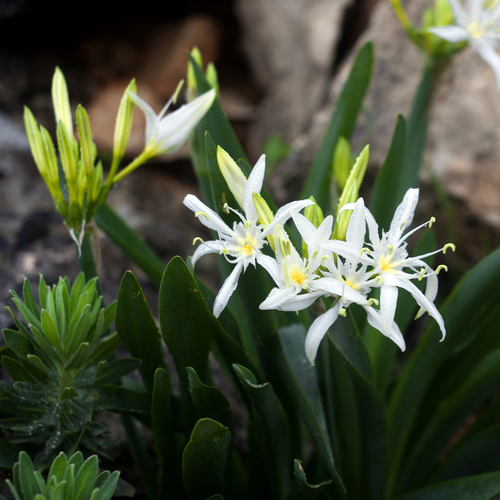
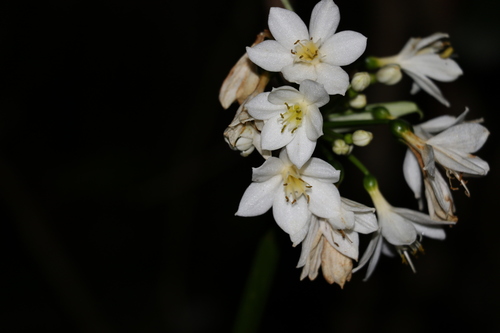
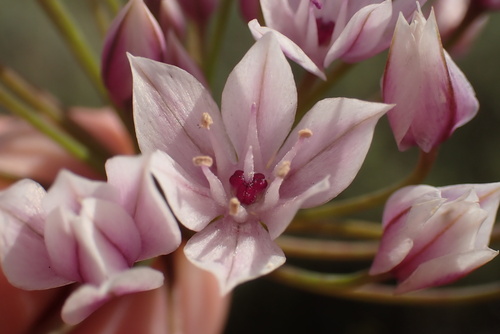
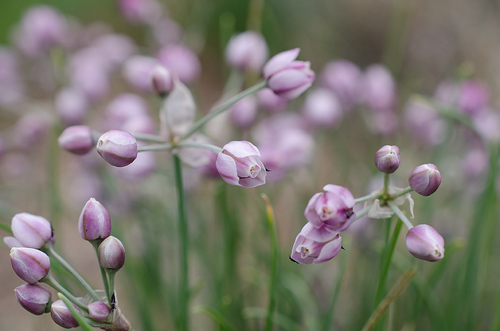
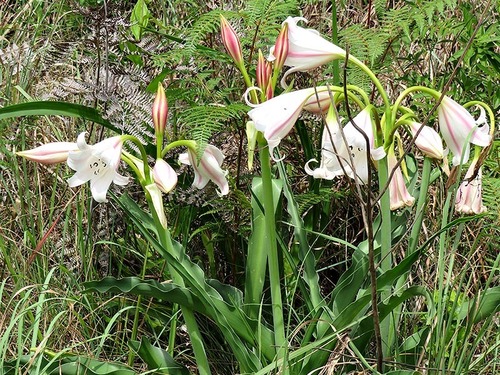
Crinum macowanii Baker is a deciduous bulbous plant. It produces long, slender, bell-shaped, strongly scented flowers that are white with dark pink stripes. Bulbs of this species vary widely in size, ranging from 6 to 25 centimetres in diameter.
Crinum macowanii is one of the most widely distributed Crinum species in Africa, and is native to most of east, central, and southern Africa. It grows naturally in multiple habitats including moist grassland, vlei, deciduous woodland, and along rivers and coastlines. It can grow in hard dry shale, sandy flats, and brackish to reddish clay soils, at elevations between 1000 and 2600 metres above sea level. Its survival is threatened by unsustainable harvesting driven by its reputation as a medicinal plant.
Across much of Africa, the bulbs of Crinum macowanii are used to treat a wide range of conditions, while the roots and leaves have far fewer traditional uses. In Zimbabwe, infusions made from the plant's bulb are used to relieve back pain, as an emetic, and to increase lactation in both humans and animals. Zulu and Xhosa people use the plant to treat bodily swelling, urinary tract disorders, and itchy rashes. It is also used to treat a variety of other ailments including acne, boils, diarrhea, fever, tuberculosis, and sexually transmitted infections. It is additionally used in traditional veterinary medicine in South Africa.