About Cressa cretica L.
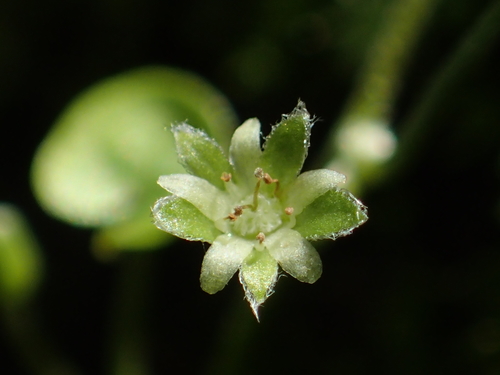
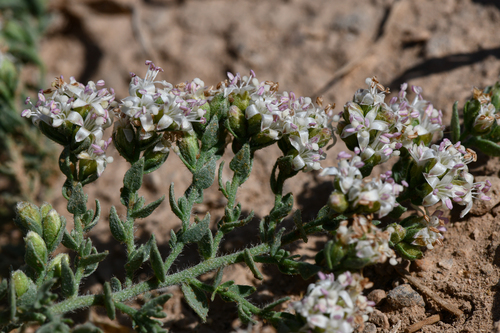
Cressa cretica L. is a densely branching subshrub that reaches around 38 cm (15 in) in height. Its leaves are small, stubby, obtuse, and covered in silky hairs. Flowers grow in clusters in the axils of upper leaves and are white; the back of the reflexed corolla lobes are hairy near their tips. Fruits are ovoid, pointed capsules that usually hold a single seed.
This species is found in Mediterranean Europe, northern and central Africa, the Arabian Peninsula, the Middle East, and western Asia extending east to India and Sri Lanka. It also occurs in parts of southeastern Asia and several Australian states, though it is not confirmed whether it is native to these areas. It is a halophyte, growing in salty areas of oases, seasonally wet depressions in sandy regions, salt marshes, and beside temporary pools.
Cressa cretica is widely used in traditional medicine, where it is reputed to act as an anthelmintic, expectorant, digestive aid, aphrodisiac, and tonic, among other uses. Scientific research has found that the plant contains multiple chemical constituents, and shows potential as an antibacterial, antifungal, and antitussive agent. When combined with Tridax procumbens and Euphorbia thymifolia, it has been found effective as an anticancer treatment. It has also been shown to improve testicular function in rats.