About Crepis aurea (L.) Cass.
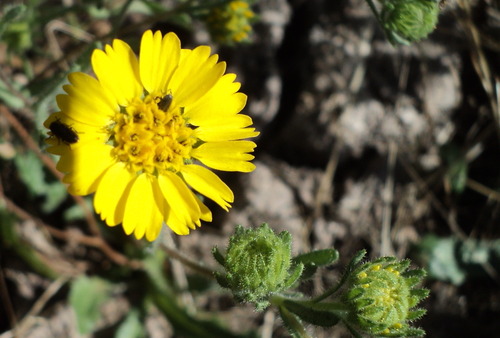
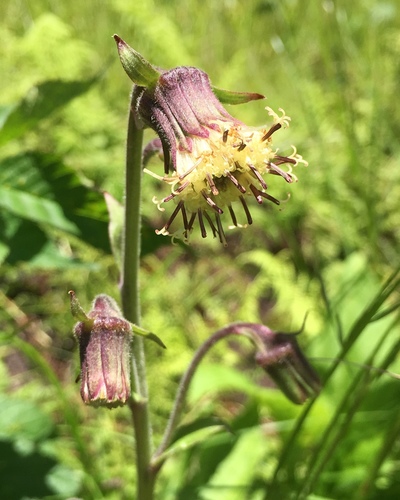
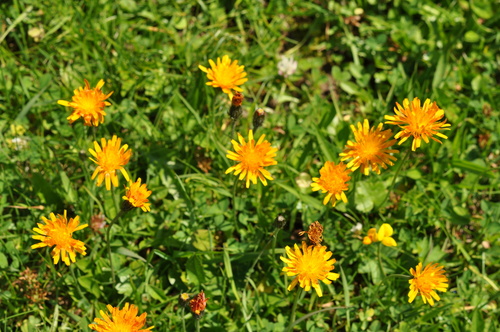
Crepis aurea (L.) Cass. is a perennial herb, 2 - 30 cm (usually 5 - 20 cm) in height. The caudex is swollen, either branched or simple. There are 1 - 8 flowering stems, which are scapelike and terete. They are rarely glandular, glabrous or hirsute above, striate, and rarely branched. Rosette leaves are elliptic to obovate, 1.0 - 11.0 cm long and 0.3 - 3.0 cm wide (usually 0.5 - 2.0 cm). They are pinnatifid or entire, dentate or entire, acute or often mucronate, and glabrous. Cauline leaves are few or absent, reduced to scales. Each head has 20 - 50 (usually 20 - 30) flowers. The involucre is campanulate at flowering, 6.0 - 11.0 mm long and 4.0 - 7.0 mm in diameter at flowering. It is dark green, glabrous, tomentose or hirsute. The outer involucral bracts are linear and obtuse, with a minutely ciliate margin at the apex. The inner involucral bracts are narrowly ovate or oblong, 11.0 - 16.0 mm long (usually 11.0 - 13.0 mm). The receptacle is shortly ciliate, areolate or alveolate. The corolla is ligulate, 7.0 - 16.0 mm long, with colors ranging from reddish, orange to yellow. The ligule is 6.0 - 7.0 mm long and up to 2.0 mm wide, reddish - purple on the outer face. The anther tube is 3.0 mm long, and the apical appendages are 0.5 mm long. The style branches are up to 2.0 mm long, either yellow or green. Achenes are fusiform, 5.0 - 6.0 mm long (usually 5.0 - 5.5 mm), smooth or muricate, subterete, pale brown, with 16 - 18 ribs and strongly attenuate. The pappus is white, 4.0 - 6.0 mm long, persistent and flexible. This description is based on works by Babcock (1947), Kamari (1991), and Lamond (1975).