About Creophilus oculatus (Fabricius, 1775)
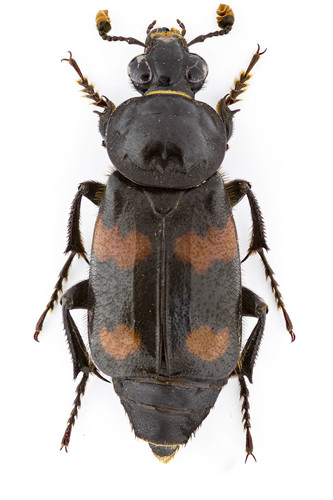
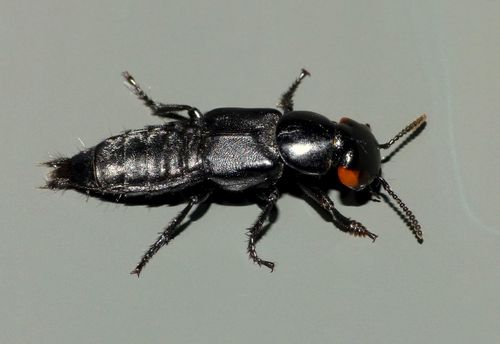
Creophilus oculatus (Fabricius, 1775) reaches approximately 20 mm in length, making it the largest rove beetle out of the over 1000 rove beetle species recorded in New Zealand. It has an elongated body shape, and is black and shiny. Like other members of the Staphylinidae (rove beetle family), it has reduced elytra that only cover one third of its abdomen. Even with these shortened wing covers, it is a strong flier, though it does not fly willingly. It prefers to escape predators by running while curling its abdomen over its back, and will fly towards lights when it does take flight. Distinctive orange-red spots located behind its eyes separate this species from all other Creophilus species, with the rare exception of C. huttoni. The original description of this species listed both Australia and New Zealand (called "nova Hollandia et Zelandia" at the time) as collection localities. Over time, researchers have variously classified Creophilus oculatus as indigenous, adventive, or endemic to New Zealand, and some have also considered it indigenous to Australia. The most recent research interprets Creophilus oculatus as endemic to New Zealand. This species is common and widespread across New Zealand, found on the North Island, South Island, Stewart Island, Chatham Islands, Kermadec Islands, Snares Islands, and Auckland Islands. It occupies a very wide range of habitats, including pasture, beaches, forest, swamp, tussock land, and penguin rookeries, and can be found from sea level up to 2400 m above sea level. Specimens of Creophilus oculatus have been collected year-round, with the highest collection rates occurring between September and May.