About Crax rubra Linnaeus, 1758
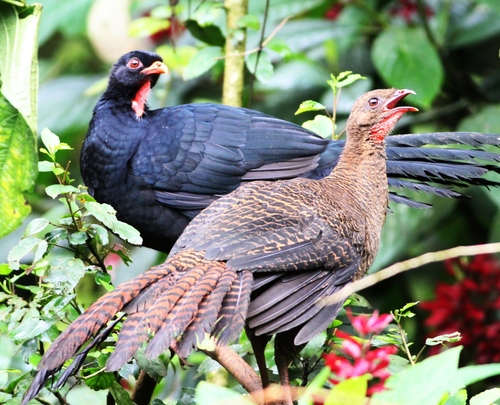
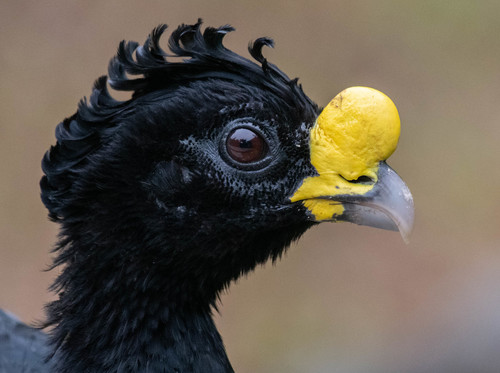
The great curassow (Crax rubra Linnaeus, 1758) is a very large cracid, measuring 78–100 cm (31–39 in) in length and weighing 3.1–4.8 kg (6.8–10.6 lb). Females are somewhat smaller than males. It is the most massive and heavy species in the cracid family, though a small number of other cracids match it in total length. Three other curassow species — the northern helmeted curassow, the southern helmeted curassow, and the black curassow — all have around the same average length as the great curassow. For this species, standard measurements are as follows: wing chord length ranges from 36 to 42.4 cm (14.2 to 16.7 in), tail length ranges from 29 to 38 cm (11 to 15 in), and tarsus length ranges from 9.4 to 12 cm (3.7 to 4.7 in). Excluding tail length, this species has the largest average standard measurements of any species in the cracid family. Male great curassows are primarily black, with a curly crest, a white belly, and a yellow knob on the bill. Females occur in three distinct morphs: the barred morph, which has barring on the neck, mantle, wings, and tail; the rufous morph, which has overall reddish-brown plumage and a barred tail; and the dark morph, which has blackish plumage on the neck, mantle, and tail (the tail is often faintly vermiculated), with some barring on the wings. In most of the species' range, only one or two of these morphs are found, and intermediate females that fall between the three defined morphs have been recorded (for example, individuals that resemble the rufous morph but have a black neck and faint wing vermiculations). The great curassow has a similar voice to many other curassows; its call is a "peculiar" lingering whistle.