About Craterellus ignicolor (R.H.Petersen) Dahlman, Danell & Spatafora
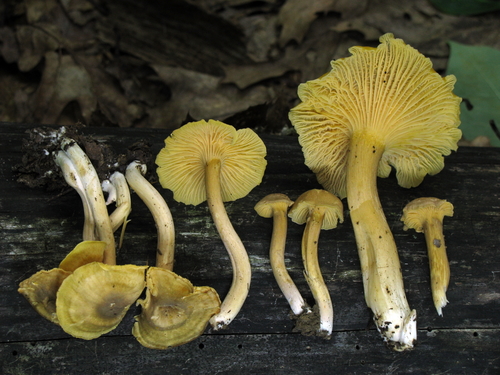
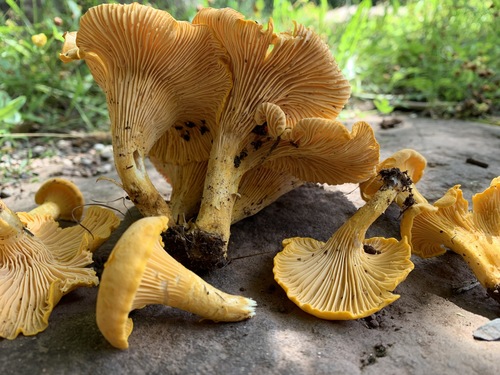
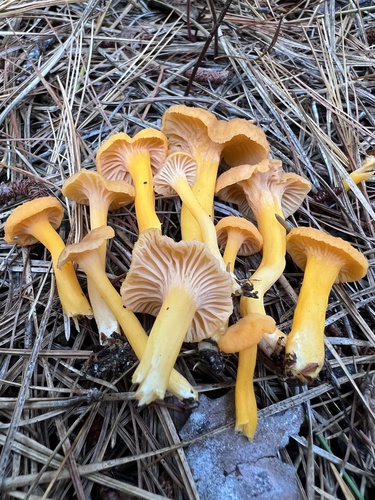
Craterellus ignicolor, commonly called the flame-colored chanterelle, is an edible fungus. It was first formally described under the name Craterellus ignicolor in 1975 from specimens collected in Tennessee, USA. Before 1975, this species was referred to as Cantharellus lutescens and Cantharellus infundibuliformis var. luteolus. In 2000, DNA analysis confirmed that this chanterelle belongs to the genus Craterellus, instead of the previously assigned genus Cantharellus. The fruiting bodies of Craterellus ignicolor most often grow among moss in heavily shaded areas, including coniferous or hardwood forests. They usually appear scattered, in groups, or in clusters from summer through fall. This fungus can be either mycorrhizal, forming a symbiotic relationship with trees, or saprotrophic, feeding on dead plant material. One of its most defining features is the presence of pinkish or brownish-orange false gills on the underside of its cap. As the cap ages, its center becomes perforated, developing a distinct vase-like shape paired with a hollow stalk. When young, the lower surface of the fungus is pale yellow to yellow-orange; as it ages, this surface typically develops pinkish or lavender tints. Its spore print is pale pinkish-yellow, and it does not have a distinctive taste or odor.