About Crataegus mexicana Moc. & Sessé ex DC.
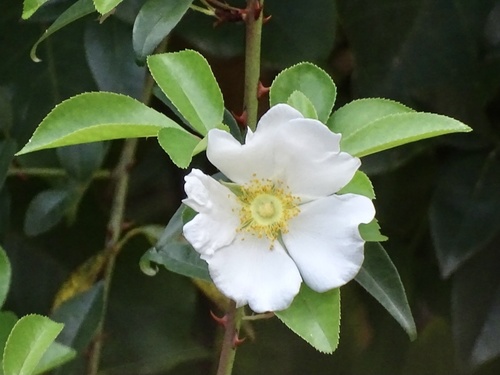
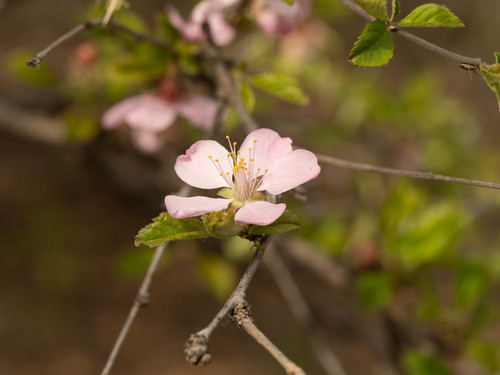
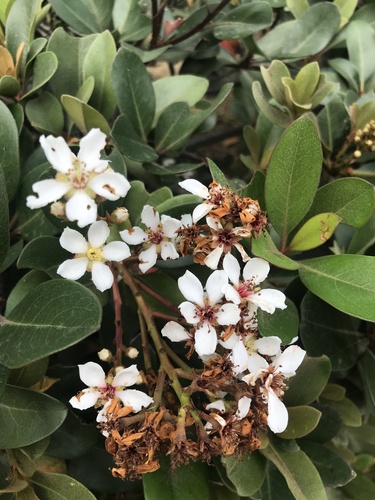
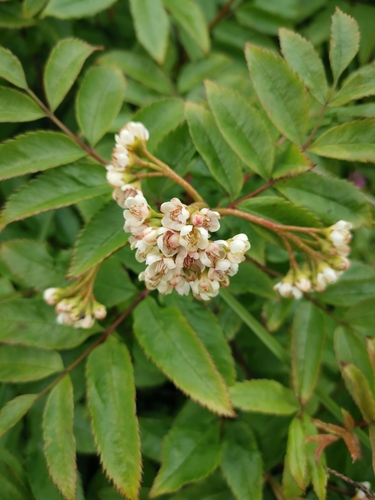
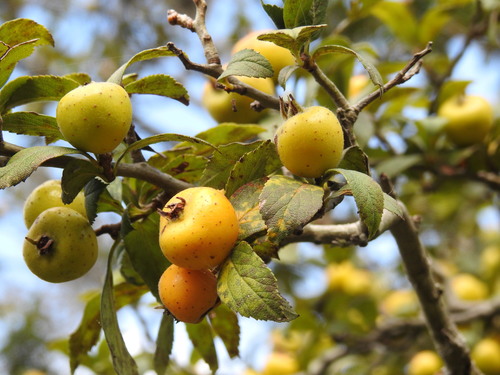
Crataegus mexicana Moc. & Sessé ex DC. is a large shrub or small tree that reaches 5–10 m in height, and grows with a dense crown. Its leaves are semi-evergreen, oval to diamond-shaped, 4–8 cm long, and have serrated margins. The plant produces off-white flowers that measure 2 cm in diameter. Its fruit is an orange-red pome, ranging from globose to oblong in shape, 2 cm long and 1.5 cm in diameter. This fruit ripens in late winter, only a short time before the following year's flowers open. In Mexico, the fruit of this species (called tejocote) is eaten cooked, raw, or canned. It resembles a crabapple, but contains three or sometimes more hard brown stones at its center. It is a main ingredient in ponche, the traditional Mexican hot fruit punch served at Christmas and New Year's Eve. For Day of the Dead celebrations, tejocote fruit and candy made from the fruit are used as offerings to the dead, and rosaries crafted from the fruit are included as altar decorations. Mixing tejocote paste, sugar, and chili powder makes a popular Mexican candy called rielitos, named for its resemblance to a tiny train rail. Because the fruit has high pectin content, it is processed to extract pectin used in food, cosmetic, pharmaceutical and textile products. Additional uses include providing food for livestock, with both leaves and fruits used for this purpose. The species also has traditional medicinal uses: an infusion made from Mexican hawthorn root is used as a diuretic and a treatment for diarrhea, while preparations made from the fruit are used to treat coughing and several heart conditions. The wood of the Mexican hawthorn tree is hard and dense, making it suitable for crafting tool handles and using as firewood.