About Crataegus douglasii Lindl.
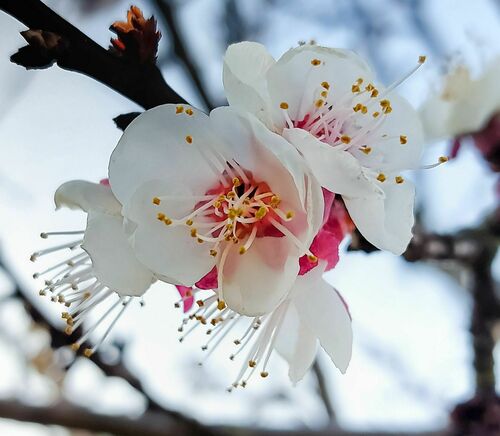
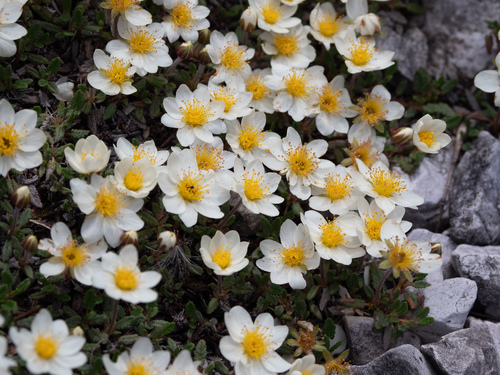
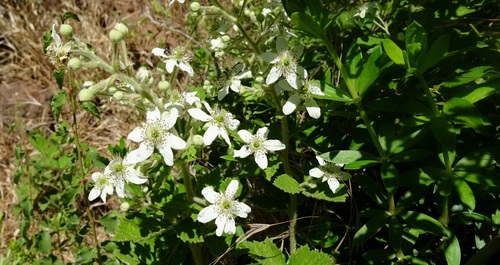
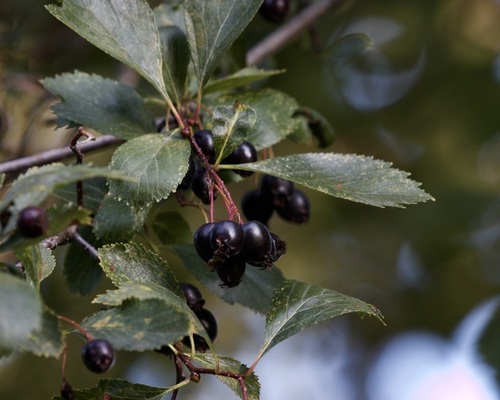
Crataegus douglasii Lindl. is a compact, erect, bushy shrub that reaches 8 to 9 meters (26 to 30 feet) in height, with a trunk up to 10 centimeters (4 inches) thick. It bears fan-shaped green leaves, 2.5 to 5 centimeters (1 to 2 inches) long, that have teeth along their distal margin. Thorns along its branches measure 1 to 2.5 centimeters in length. White flowers with greenish centers grow in bunches at the tips of each thin branch. The fruit is a blackish pome up to about 1 centimeter across, which holds 3 to 5 rocklike seeds. This thorny shrub is native to northern and western North America, and it is most abundant in the Pacific Northwest. It grows in a wide range of habitats from forest to scrubland, including moist open areas, forest edges, thickets, shorelines, streamside areas, roadsides, and coastal bluffs, at low to middle elevations. Cattle and sheep browse the foliage of this species. Many types of birds, including quail, Hungarian partridge, and ring-necked pheasant, feed on its berries, along with bears and other animals. Magpies build their nests in its branches. Crataegus douglasii acts as a larval host plant for the gray hairstreak, mourning cloak, pale tiger swallowtail, and western tiger swallowtail butterflies. Its edible fruits were an important food source for Native American peoples including the Cheyenne and Nlaka'pamux.