About Cotoneaster salicifolius Franch.
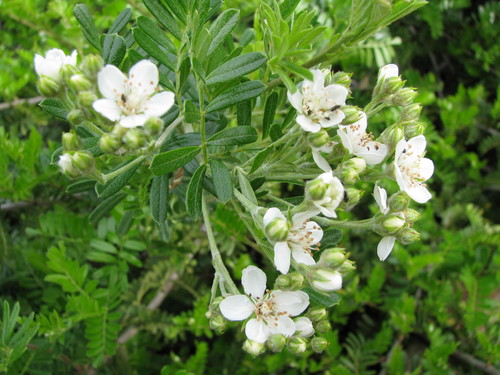
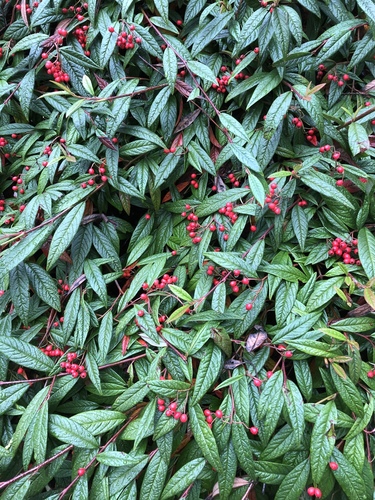
Willow-leaved cotoneaster, scientifically named Cotoneaster salicifolius Franch., has gray-brown bark, thin stems, and a sparse root system. Its leaves are alternate, simple, long, and lanceolate, with a dark green color that matches the appearance of willow tree leaves — this similarity gives the species both its common name and its scientific specific epithet salicifolius, which translates to "with leaves like willows" in reference to the willow genus Salix. Fine gray hairs cover the undersides of the leaves, and the foliage turns a maroonish shade during colder months. In June, this species produces many-flowered compound corymbs that hold white flowers each measuring 5 to 6 mm across. It develops small, showy, apple-like red pomes as fruit; these ripen between September and October and persist on the plant through the winter. The diploid chromosome number for this species is 34 (2n=34). In cultivation, different cultivars of willow-leaved cotoneaster are suited to a range of garden uses. It can be grown as a hedge or screen, used as ground cover for banks, planted in small groupings or large masses, or placed anywhere its colorful autumn foliage and bright red fruit can act as a garden focal point or centerpiece.