About Cotoneaster franchetii Boiss.
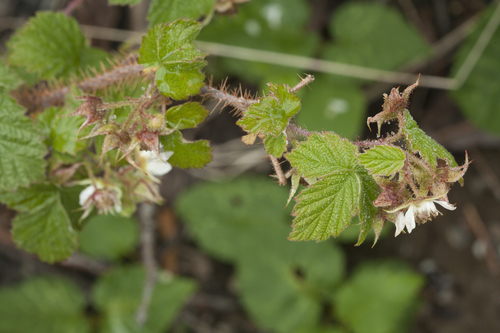
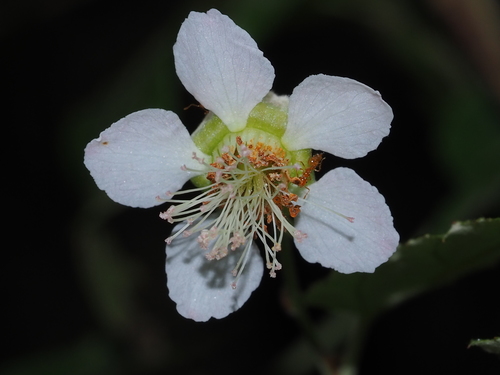
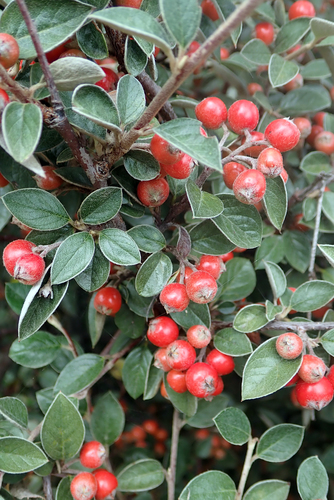
Cotoneaster franchetii, commonly called Franchet's cotoneaster or orange cotoneaster, is a species of the Cotoneaster genus. It is native to southwestern China, specifically the provinces of Guizhou, Sichuan, Tibet, and Yunnan, and is also found in adjacent northern Myanmar and northern Thailand. It grows as an evergreen or semi-evergreen shrub that reaches a height of 3 metres (9.8 ft). Its leaves are oval-acute, measuring 2–3.5 centimetres (0.79–1.38 in) long and 1–1.5 centimetres (0.39–0.59 in) wide; the upper surface is shiny green, while the lower surface is pubescent with dense whitish to yellowish hairs. Flowers grow in corymbs of 5 to 15 flowers each. Individual flowers are 6–7 millimetres (0.24–0.28 in) in diameter, with five petals that are pink on the outer side and white on the inner side. Its fruit is a red pome 6–9 millimetres (0.24–0.35 in) in diameter. Fruit-eating birds eat these fruits and disperse the plant's seeds through their droppings. Some authors recognize two varieties of this species, though the Flora of China does not treat these varieties as distinct taxa. The first is the autonymic variety Cotoneaster franchetii var. franchetii, which matches the main species description given above. The second is Cotoneaster franchetii var. cinerascens Rehd, which grows larger, reaching up to 4 metres (13 ft) tall, with leaves growing to 4 centimetres (1.6 in) long, and up to 30 flowers per corymb. Some authors also recognize a third variety, Cotoneaster franchetii var. sternianus, though it is more commonly treated as a separate species, Cotoneaster sternianus. As a separate species, Cotoneaster sternianus has received the Royal Horticultural Society's Award of Garden Merit. Cotoneaster franchetii is a popular ornamental plant. It has escaped from cultivation and become locally naturalized in parts of the British Isles, the Pacific Northwest of North America, and Northern California. Scientists at the Royal Horticultural Society (RHS) in the UK conducted a study testing how effectively different hedge shrubs, including cotoneaster, hawthorn, and western red cedar, absorb air pollution. They found that bushy, hairy-leafed cotoneaster varieties like Cotoneaster franchetii act as "super plants" that can help absorb air pollution. On high-traffic roads, the dense, hairy-leaved Cotoneaster franchetii was at least 20% more effective at absorbing air pollution than other shrubs commonly planted along roadsides.