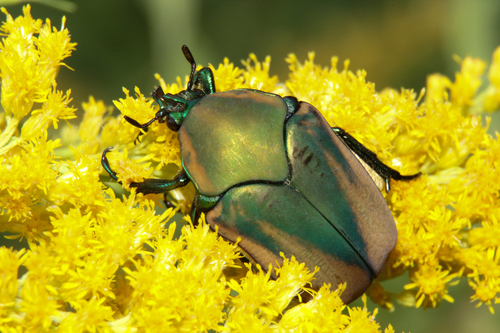
About Cotinis mutabilis (Gory & Percheron, 1833)
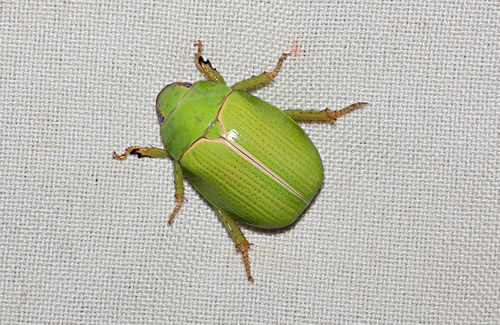
Cotinis mutabilis, commonly known as the figeater beetle, green fruit beetle, or fig beetle, is a species of scarab beetle belonging to the subfamily Cetoniinae, a group called flower chafers. Most flower chafers feed on pollen, nectar, or petals. This species is primarily found in the southwestern United States, including California, and Mexico. It is frequently confused for the green June beetle (Cotinis nitida) and occasionally the Japanese beetle (Popillia japonica), both of which live in the eastern United States. The full distribution of Cotinis mutabilis extends from the United States down to northern South America, and it has been recorded in nearly all of Mexico. It lives in tropical and subtropical forests, oak forests, and cloud forests, as well as a wide range of other vegetation types and urban landscapes, at elevations up to 2,700 meters (10,000 feet) above sea level. After mating, adult females lay eggs in decaying organic matter or compost piles, which feed the larvae once they hatch. Larvae of this species are commonly called crawlybacks. They reach a maximum length of 2 inches (5.1 cm), are thick and white with dark heads, and have six small, non-functional legs. To move, they roll onto their backs and propel themselves upside down, using stiff dark hairs on their backs for traction. When at rest, they curl into a firm C shape. Pupation takes place in spring, and adult beetles emerge between July and September, with timing varying by location. Adult figeater beetles grow to approximately 1.25 inches (3.2 cm) long. They are active during the day, and often gather in tree shade near preferred breeding areas to search for mates. They produce a loud buzzing sound similar to that of carpenter bees, which may be because they can fly without opening their elytra — a trait shared with many other flower chafers.