About Cosmia trapezina (Linnaeus, 1758)
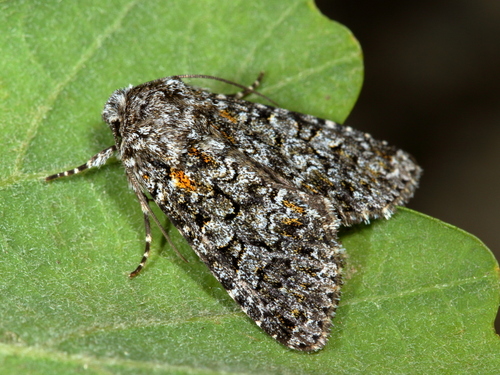
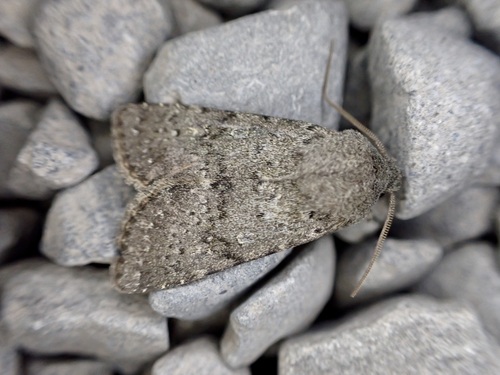
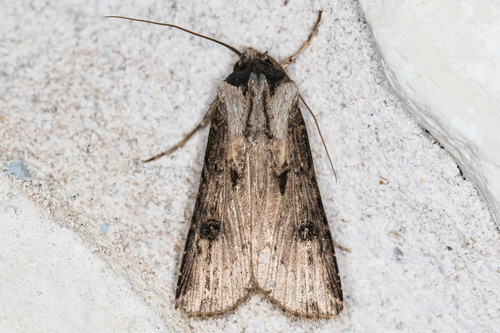
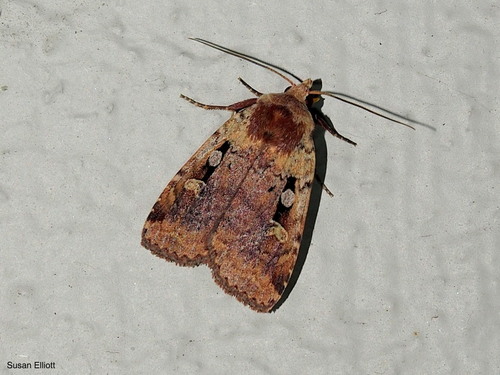
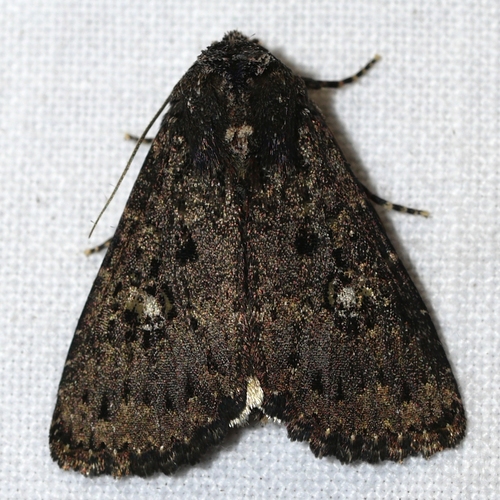
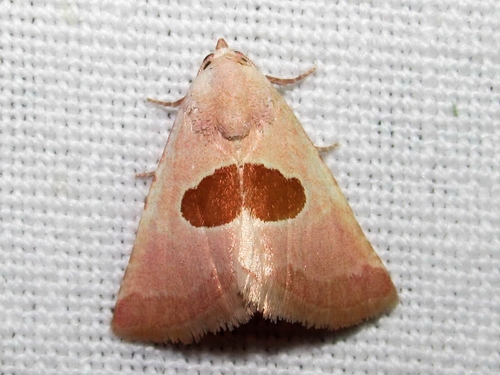
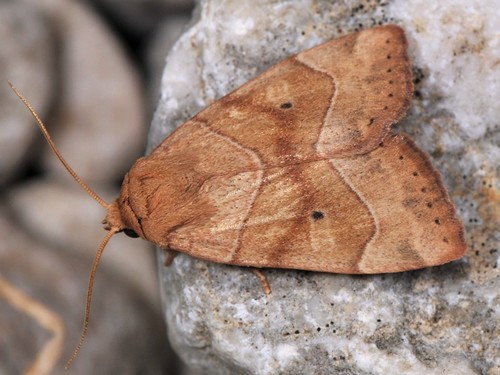
This is a highly variable moth species, varying in both size (wingspan 28–38 mm) and colouration. The ground colour of its forewings ranges from pale buff to dark or reddish brown, marked with three narrow fascia. The area between the two innermost fascia is sometimes much darker than the surrounding ground colour, and features stigmata that are often quite indistinct. Melanic forms occur occasionally. The hindwings vary in colour from pale cream to dingy brown. This moth flies at night from July to September; this flight season refers to the British Isles, and may differ in other parts of the species' range. It is attracted to light, sugar, and sometimes to nectar-rich flowers. The larva is green with yellow lines and black and white spots. It feeds on a wide variety of plants, chiefly trees and shrubs, and also feeds on the larvae of other Lepidoptera species, occasionally even consuming other individuals of its own species. The species overwinters as an egg. This species occurs throughout almost the whole of Europe. In the north, its range extends to Middle Fennoscandia, and in the east it reaches the Urals. It can also be found in North Africa, Asia Minor, Syria, Iraq, Iran, the Caucasus, and Central Asia extending to China, Korea and Japan, where the subspecies C. t. exigua (Butler, 1881) occurs. In the Alps, it can be found at elevations up to 1600 m. A full list of recorded food plants is referenced elsewhere.