About Corylus colurna L.
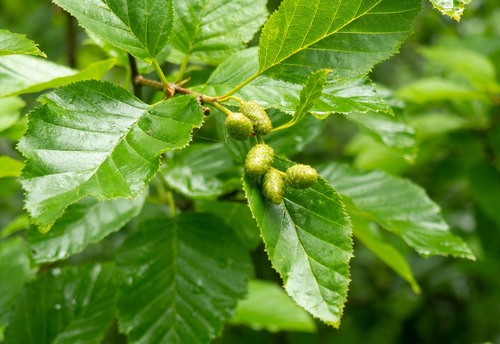
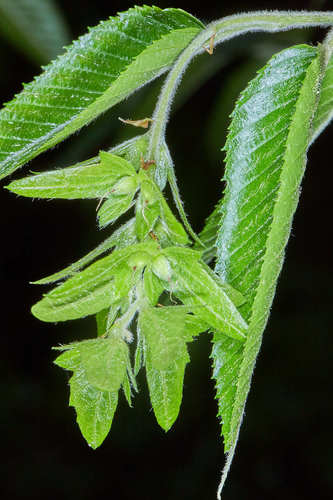
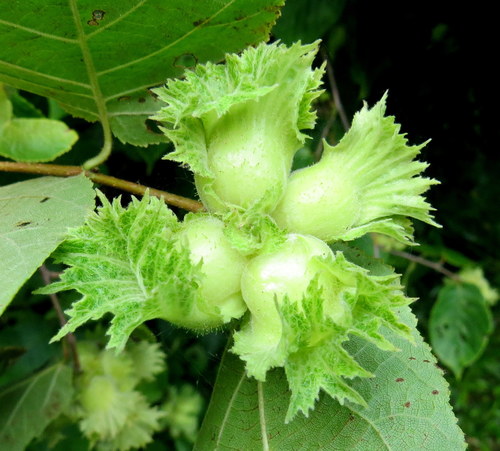
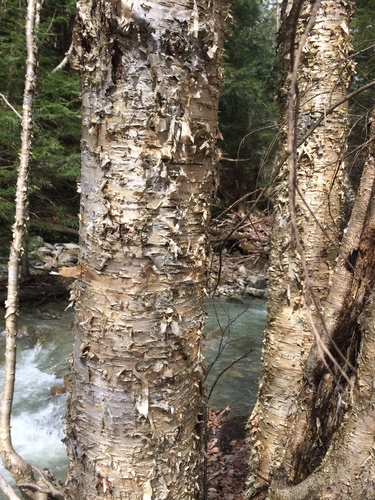
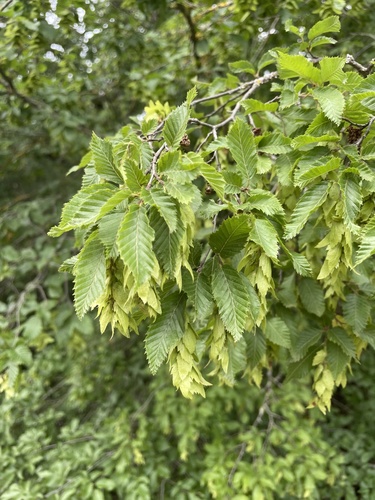
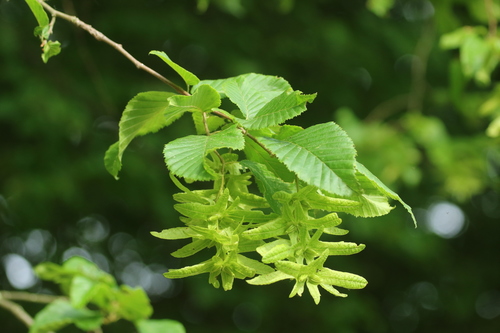
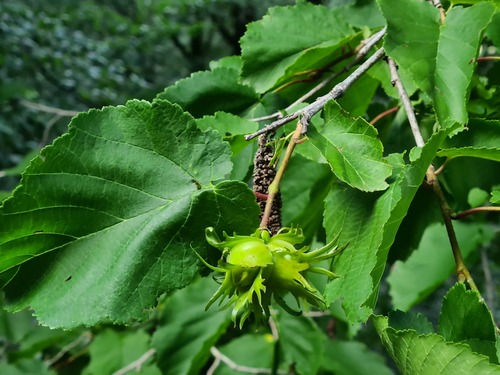
Corylus colurna L. is a large hazel species that typically grows 25 m (82 ft) tall, reaching an exceptional maximum height of 33 m (108 ft). It has a stout trunk that grows up to 1 m (3 ft) in diameter, rarely reaching 1.6 m (5 ft). Young trees have a slender, conical crown that becomes broader and irregular as the tree ages. Its bark is pale grey-buff with a thick, corky texture. On young trees, main limbs are small in diameter relative to the straight trunk, and grow from the trunk at almost a 90-degree angle. This structure makes the tree well-suited for urban conditions and helps it maintain a symmetrical crown, which is popular with landscape architects. The leaves are deciduous, rounded, 7–13 cm (2.8–5.1 in) long and 6–14 cm (2.4–5.5 in) across. Both leaf surfaces are softly hairy, and leaf margins are coarsely double-serrate to shallowly lobed. The buds are ovoid and pale brown. Flowers appear in late winter or early spring before leaves emerge; this species is monoecious, meaning each individual catkin is single-sex, but both sexes grow on the same tree, often on the same twig. Male catkins are conspicuous, pale yellow, and 5–10 cm long. Female catkins are very small and inconspicuous, largely hidden inside buds, with only bright red 1–3 mm long styles visible. Its fruit is a nut called the Turkish hazel nut, Turkish nut, or Constantinople nut. The nut is around 1–2 cm long, surrounded by a thick, softly spiny and bristly involucre (husk) 3 cm in diameter that encloses the entire nut except for its tip. Nuts grow in tight clusters of 3–8, with the involucres fused at the base. Fruit matures between September and October, and is edible. Its taste is very similar to common hazel, but it is smaller and has a thicker nut shell. Nuts are occasionally gathered from wild and urban trees, but their small size and very hard, thick 3 mm thick shell give them little to no commercial value. Corylus colurna is important for commercial hazelnut orchards, because it does not produce suckers, making it the ideal rootstock for grafting nut-bearing common hazel cultivars. Nut production is irregular, occurring only every two to three years. This species is native to southeast Europe and southwest Asia, ranging from the Balkans through northern Turkey to northern Iran. Corylus colurna has a medium growth rate. It tolerates occasional drought and alkaline soil, though it prefers moist, well-drained soil and full sun. Once established, it tolerates heat, cold, and drought, and has no serious pest or disease problems. It is not easily transplantable, and requires extra summer watering after transplanting. It takes approximately two years after transplanting for the tree to become established and survive on its own. It has received the Royal Horticultural Society's Award of Garden Merit. Besides its use as a single-stem rootstock for Corylus avellana, Corylus colurna is widely cultivated as an ornamental tree in Europe and North America. It tolerates difficult growing conditions in urban sites very well, which has increased its popularity for civic planting schemes in recent decades. It works well as a shade tree, since it produces dense shade. Its narrow crown and ability to withstand air pollution make it well-suited for use as a street tree in urban areas or a specimen tree in parks. Its tight, consistently shaped narrow crown gives it a formal appearance in the landscape. Additional landscape uses include growing for fruit, planting in difficult and dry sites, and use in naturalistic areas.