About Cortinarius semisanguineus (Fr.) Gillet
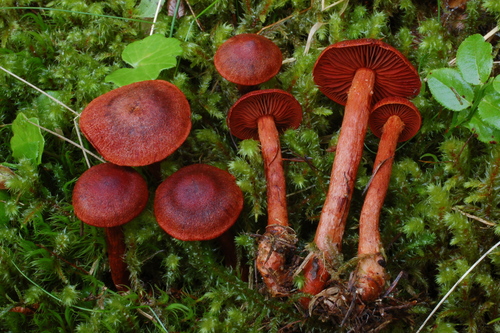
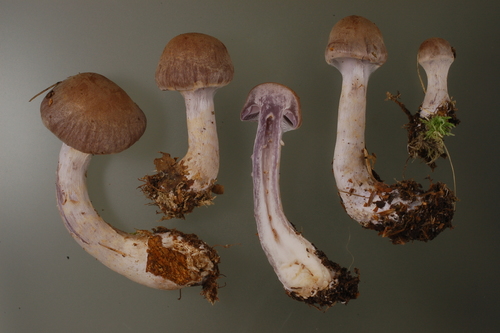
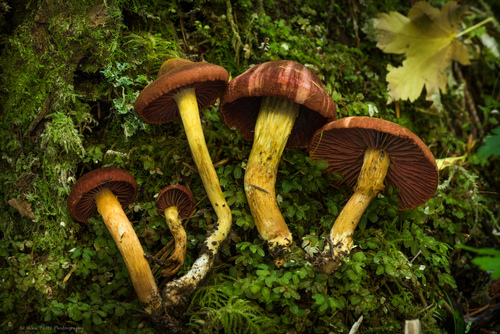
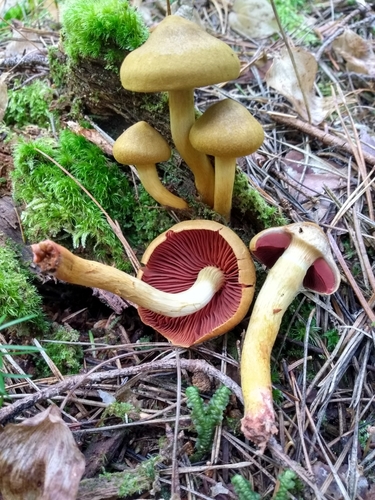
The cap of Cortinarius semisanguineus is initially bell-shaped (campanulate), and flattens as it matures while retaining a broad, shield-like central boss called an umbo. The cap typically measures 2–5 cm (1–2 in) across, and is colored brownish ochre or umber with a darker center. It is dry and covered in fine fibrils. The stipe is usually the same color as the cap or paler; it is either smooth or finely fibrillose like the cap, and is long, slim, and cylindrical. Remnants of the cortina (partial veil) often remain on the stem, but these remnants are quite fleeting. The gills are adnate, markedly sinuate, and fairly crowded. They start out blood-red, and age to a cinnamon-brown color; the spore print is this same cinnamon-brown shade. The flesh is reported to smell of radishes; it is ochre in the stipe, and more olive-toned in the cap. Cortinarius semisanguineus grows in conifer woods or mixed conifer and birch woods during autumn. It occurs occasionally in Britain, Europe, and Scandinavia, and is common in parts of North America. It forms a mycorrhizal relationship with birch trees (Betula) and other coniferous softwood trees. It is often abundant under young spruce trees in plantations growing on acid soil, and fruits from September to November. This species can be used to produce dye for textile yarns.