About Cortinarius armillatus (Fr.) Fr.
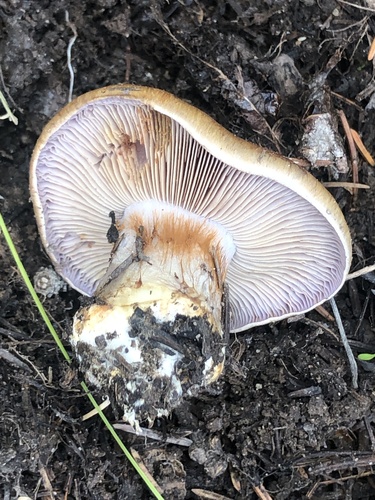
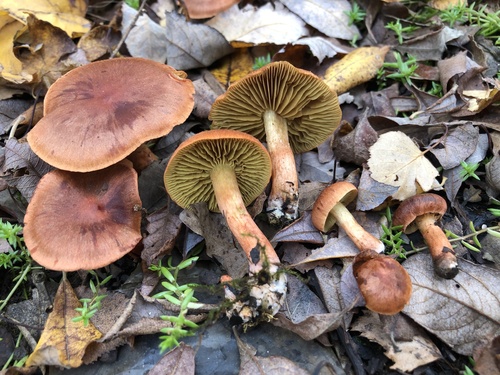
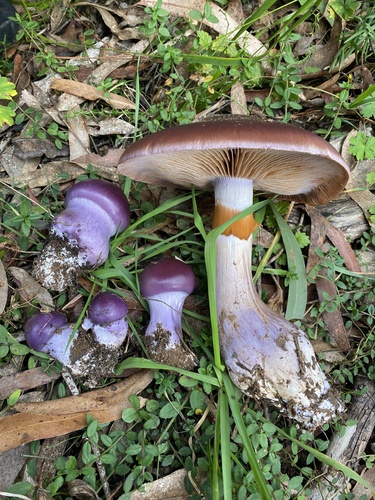
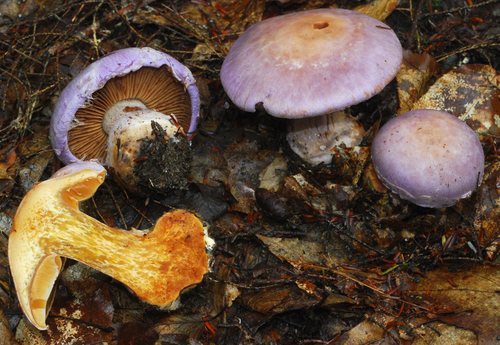
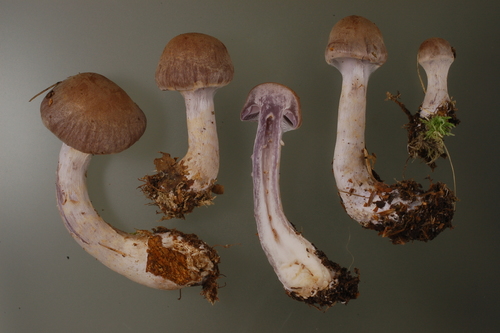
The cap of Cortinarius armillatus (Fr.) Fr. measures 4 to 13 centimetres (1+1⁄2 to 5 inches) across. It is orangish-brown, starts rounded or bell-shaped before flattening out, and sometimes develops small scales. Young gills are tan, maturing to rusty brown; they are spaced somewhat closely, and are shallowly sinuate. The spore print is rusty brown. The tannish stem grows up to 15 cm (6 in) long and 2.5 cm (1 in) thick, it is usually wider at the base and bears 1 to 5 reddish bands. The flesh is light brown, with a scent ranging from mild to radish-like. This species can be found from August to September growing under birch trees in North America, particularly the northeast, and in Europe. Opinions on its edibility vary: it has been considered edible, with quality ranging from mediocre to good, though extreme caution is advised to confirm correct identification. Some field guides list it as inedible. It has been found to contain orellanine, but at much lower concentrations than lethal webcap species. When used to dye cloth, it produces pink dye without added mordant metals, yellow dye with tin, green dye with copper, and olivic dye with iron.