About Cornus sanguinea L.
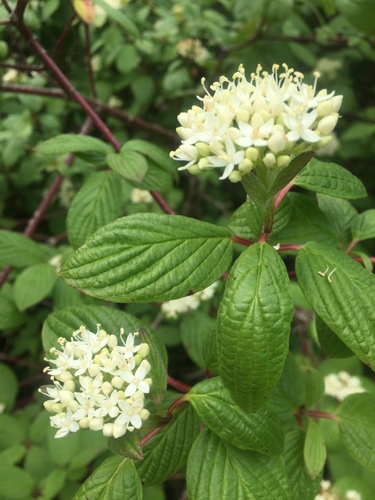
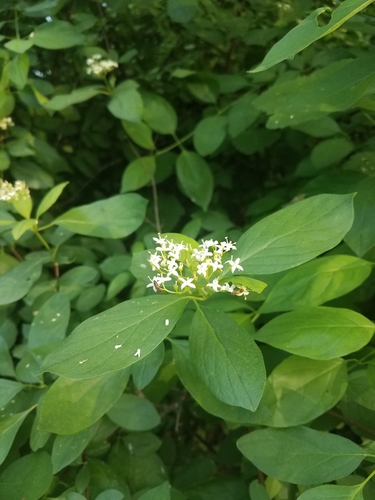
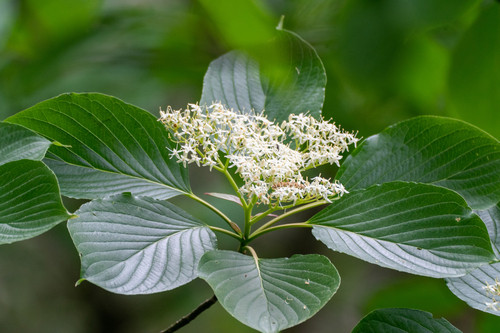
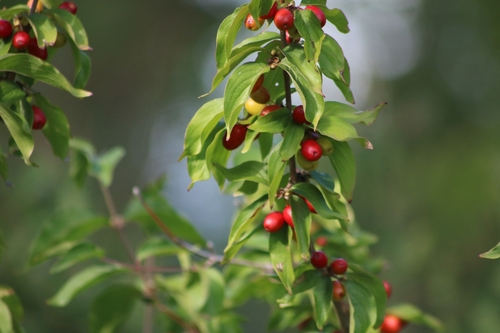
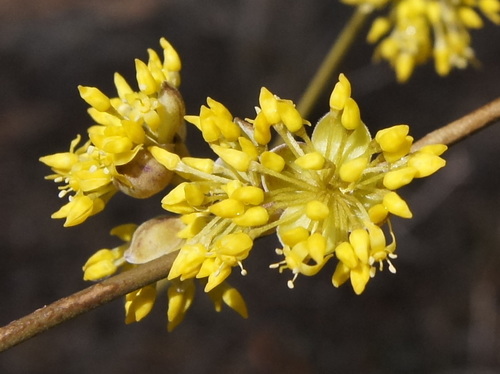
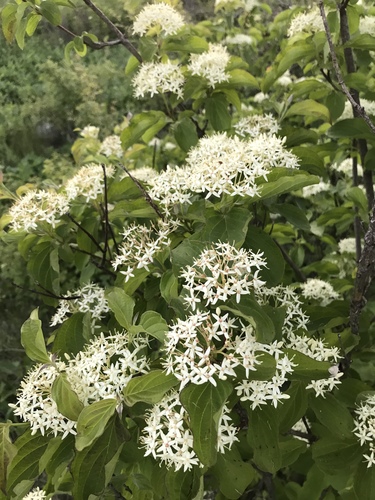
Cornus sanguinea L. is a medium to large deciduous shrub that reaches 2–6 metres (7–20 ft) in height. It has dark greenish-brown branches and twigs. Its leaves are arranged oppositely, measure 4–8 centimetres (2–3 in) long and 2–4 centimetres (0.8–1.6 in) wide, have an ovate to oblong shape with an unbroken margin, are darker green on the upper surface and paler below, and have a rough texture from short stiff hairs. The small hermaphrodite flowers are 5–10 millimetres (0.2–0.4 in) across, have four creamy-white petals, and grow in clusters 3–5 centimetres (1–2 in) in diameter; they are pollinated by insects. The fruit is a round black berry 5–8 millimetres (0.2–0.3 in) across that contains a single seed. These berries are sometimes called dogberries. In terms of ecology, this species prefers moderately warm, sunny locations, though it can tolerate shade. In the southern parts of its range, it grows in mountain areas, while in cooler regions like Scandinavia, it grows at sea level. It requires light, often alkaline, soils. It spreads via both seeds and stolons, and also reproduces by seed and root sprouts, letting it effectively colonize land and form dense thickets. Depending on local conditions, it can be invasive. Its native range covers most of Europe and western Asia. It is especially abundant along riverbanks, in shady areas and ravines. It grows at forest edges, in regenerating unforested former woodland areas, and in prickly woodland fringes alongside other thorny shrub species, including Clematis vitalba, Crataegus monogyna, Malus sylvestris, Prunus spinosa, Rubus idaeus and Rubus ulmifolius. For uses, its leaves are a food source for some animals, including Lepidoptera such as the case-bearer moth Coleophora anatipennella. Its dogberries are eaten by some mammals and many bird species; many frugivorous passerines prefer these berries over human-grown fruits. For this reason, the plant is often grown in organic gardening and permaculture to protect orchard crops, while also letting gardeners benefit from the fact that frugivorous birds hunt pest insects during their breeding season to get the high amount of protein their young need. Cultivated garden varieties are often called 'winter fire' because their leaves turn orange-yellow in autumn, then fall to show striking red winter stems. The straight woody shoots of this plant can be used to make prods, skewers, or arrows. The prehistoric Ötzi the Iceman, discovered in 1991 on the Italy-Austria border, carried arrow shafts made from this dogwood. The common name 'dogwood' originates from Cornus sanguinea: before the Industrial Revolution, Northern Europeans often used its wood to make treenails called 'dags', dowels, and pegs. The wood of Cornus sanguinea is unusually hard, dense, and tough, with an oily texture that helps when driving pegs into holes.