About Coriolopsis gallica (Fr.) Ryvarden
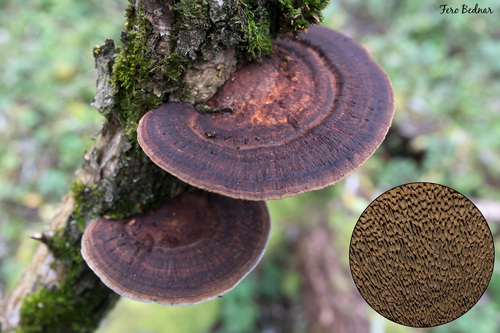
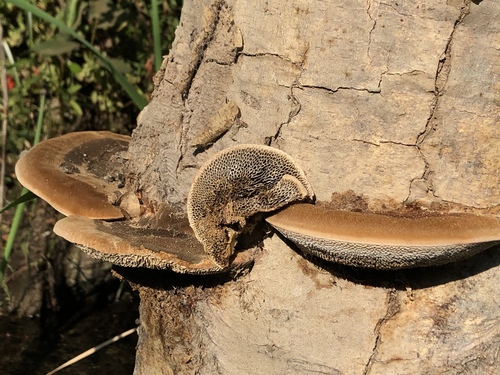
Coriolopsis gallica, commonly known as the brownflesh bracket, is a fungus that grows on decaying wood. It is not associated with any plant disease, so it is not considered pathogenic. All isolated strains of Coriolopsis gallica share a common trait of the Basidiomycota division: they can degrade wood components, primarily lignin, and cellulose to a lesser degree. This degradation process leaves an area covered by accumulated white cellulose powder. Because of this, C. gallica is classified as a "white-rot" fungus, alongside many other basidiomycetes. Its ability to preferentially break down lignin-related components, including melanoidins, polyphenols, and other aromatic compounds, is of biotechnological interest. It has potential applications in the paper industry (for recycling and bleaching), beer production, sugar cane production, and the bioremediation of industrial wastewater from these and other industries. Although lignin-degrading activities in Basidiomycota are typically carried out by a combination of enzymes including laccases, manganese peroxidases, and lignin peroxidases, lignin modification in Coriolopsis gallica and its phylogenetically close relative Trametes spp. relies mainly on laccases, which are even present in multiple genomic copies. This differs from other well-studied white-rot basidiomycetes such as Phanerochaete spp., where laccase activity has almost no role in lignin biodegradation.