About Coreopsis bigelovii (A.Gray) Voss
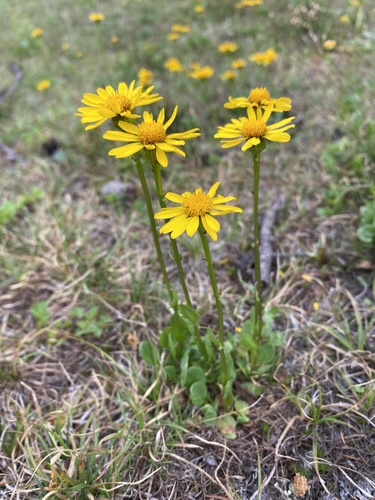
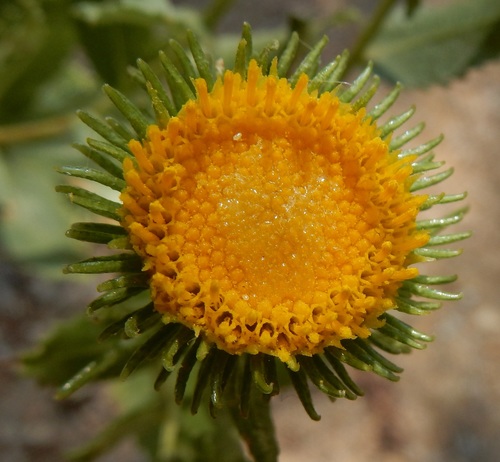
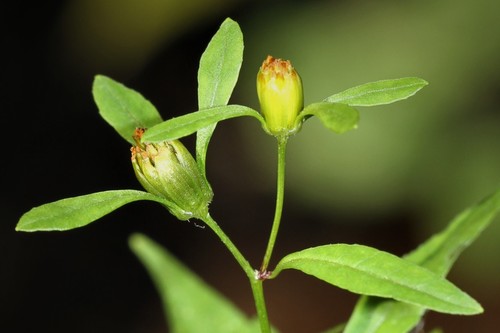
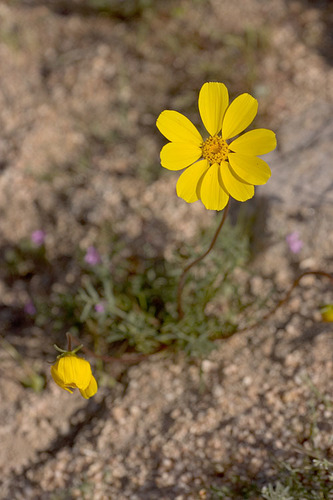
This species is also referred to as Leptosyne bigelovii, an annual herb that produces one to many stems with erect, stem-shaped inflorescences that grow 10 to 30 centimeters tall. Its leaves are divided into narrow lobes, which are sometimes further subdivided, and most leaves are found at the base of the plant. The numerous inflorescences hold solitary flower heads; each flower head has a bulbous involucre made of rough phyllaries. The flower head has a center filled with many yellow disc florets, surrounded by a fringe of five to ten ray florets that reach up to 2.5 centimeters (1 inch) in length. The fruit produced by this plant is a small achene. Fruits from ray florets are rough and bumpy, and lack a pappus; fruits from disc florets are more slender, shiny, edged with hairs, and tipped with a pappus made of scales. Leptosyne bigelovii can be told apart from Leptosyne calliopsidea by its linear outer phyllaries, as Leptosyne calliopsidea has triangular to ovate outer phyllaries. The outer phyllaries of Leptosyne californica are narrowly lanceolate and have yellow or red hairs at their base. Native Kawaiisu and Tübatulabal peoples of California ate this plant as a raw or cooked green vegetable.