About Coreopsis auriculata L.
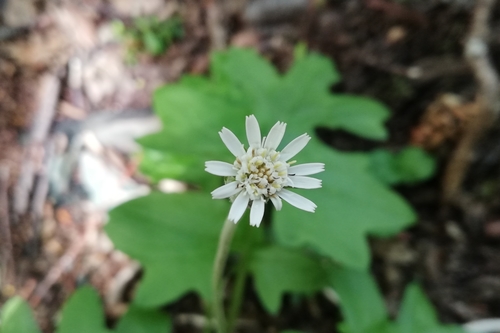
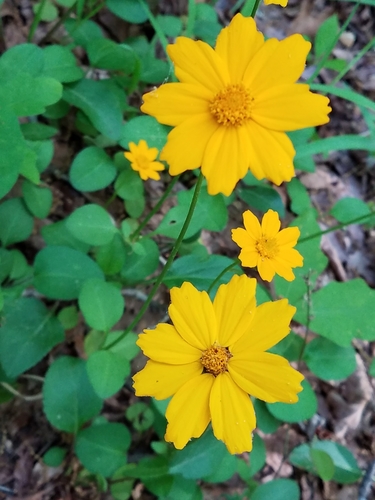
Coreopsis auriculata L. is a perennial herb that typically grows 10 to 30 cm (4 to 12 inches) tall, and occasionally reaches up to 60 cm (24 inches) tall. It produces rounded yellow flower heads that bloom during spring and early summer. This species is often stoloniferous; after flowering, it produces short stolons that allow it to form large, long, spreading colonies. The plant produces both basal leaves and leaves that grow along the stem (cauline leaves). Foliage extends across the lower quarter to half of the plant's total height. Its leaves have petioles that are 1 to 6 cm long, and may reach over 10 cm in length. Leaf blades are simple, but sometimes develop one, two, or more additional lateral lobes. Basal leaf blades range in shape from suborbiculate, to ovate-elliptic, to lance-ovate, and are typically 15 to 55 mm long and 9 to 25 mm wide. Flower heads form at the ends of peduncles that are 8 to 25 cm long. The flower heads hold phyllaries that are 9 to 12 mm long, with shapes ranging from lance-deltate to lance-ovate. The laminae of the ray florets are yellow and measure 15 to over 20 mm long. Disc florets have corollas 3.5 to 4.5 mm long, with yellow tips at the apex. The full blooming period occurs from April to June. Its single-seeded fruits, called cypselae, are 1.5 to 2.5 mm long, brown-black in color, and do not have wings. In the wild, this plant grows along roadsides, in open mixed hardwood forest areas, and in pine barrens. It is especially found in calcareous soils of the southeastern United States. The cultivar Coreopsis auriculata 'Nana' is commonly grown as a flowering ground cover in garden landscapes. Historically, an orange to red-orange dye made from the plant's flowers and stems has been used.