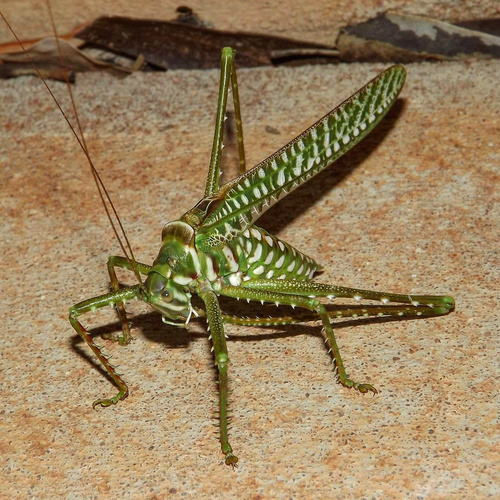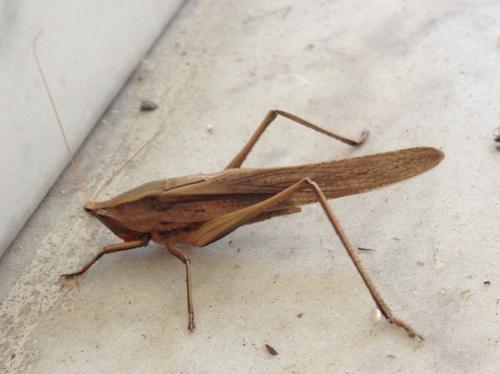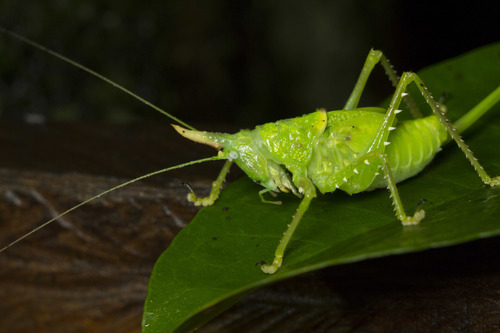
About Copiphora rhinoceros Pictet, 1888
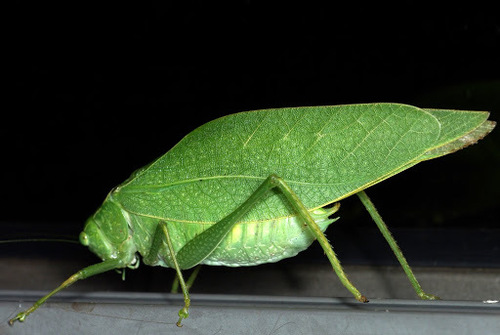
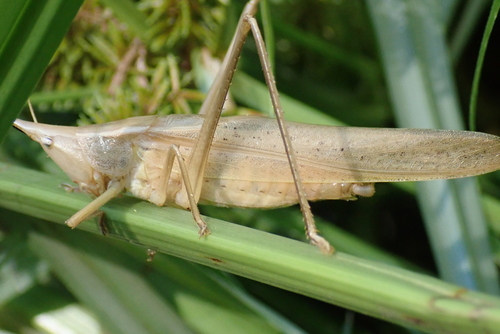
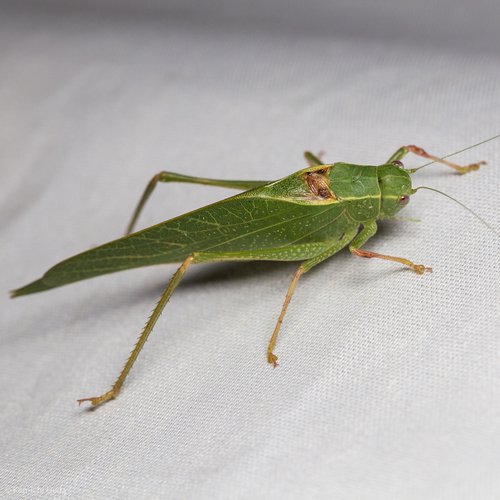
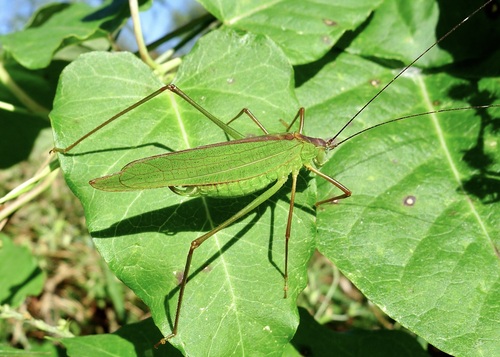
Copiphora rhinoceros, commonly called the rhinoceros katydid, is a relatively large species of katydid that can reach up to about 7.5 cm (3 inches) in length. It is found in Central America. This species belongs to the group known as conehead katydids; several species in this group have a horn-like projection on the top of the head. The horn of the rhinoceros katydid is used to fend off attacks from hungry bats. Unlike most katydid species, which are herbivores, the rhinoceros katydid is an omnivore. Its diet includes fruit, seeds, flowers, invertebrates, frog eggs and small lizards. This species can be quite noisy during the night, and its calls make up one of the dominant sounds in Central American lowland forests. The rhinoceros katydid has a lifespan of one to two years. It was first formally described in 1888 by Alphonse Pictet in his work Locustides Nouveaux ou peu connus de Musée de Genève (New or Little-known Locusts of the Geneva Museum).