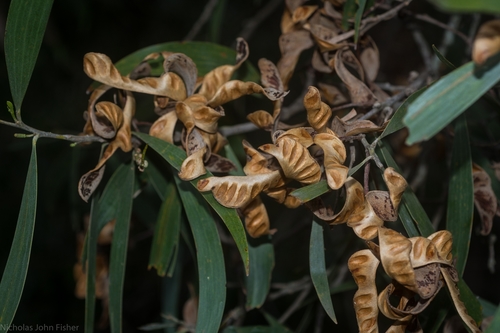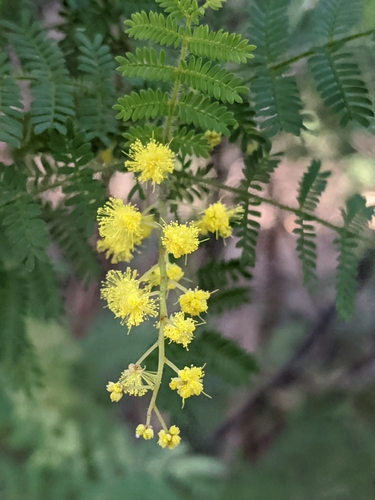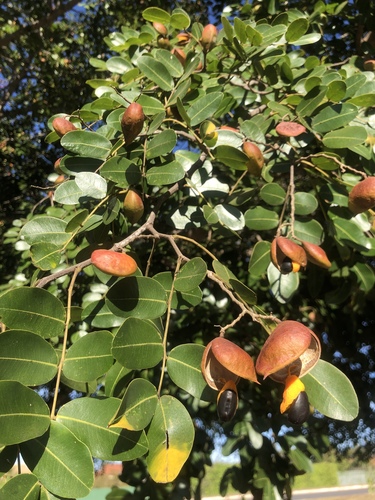
About Copaifera langsdorffii Desf.
Copaifera langsdorffii Desf. is a medium-sized to large tree that usually grows to 12 meters (39 feet) in height. It produces white flowers and small, oily fruits. Its wood is light because of its porosity, and filled with oil-containing capillaries arranged in a honeycomb pattern. To collect oil from the tree, a cavity is cut into the trunk; the oil seeps into this cavity, making it easy to harvest. This species does not grow well outside of tropical regions. Copaifera langsdorffii is also known as the diesel tree, because it produces terpene hydrocarbons in its wood and leaves, which has sparked interest in it as a potential source of renewable energy. Early cited anecdotal reports claimed the tree could be tapped to yield 40 litres (11 US gal) of oil, and that one acre planted with 100 mature trees could produce 25 barrels of oil per year. These reports were covered by Australian media in 2007, after an Australian citizen in Mackay, Queensland imported seeds of the species hoping to grow the tree to produce diesel fuel in Australia. However, a 2003 study found that actual oleoresin yields are far lower than these anecdotal claims. Small trees with a diameter at breast height (DBH) of 35 centimeters produce no oil at all; medium-sized trees with a DBH between 55 and 65 centimeters produce more oil than large trees with a DBH greater than 65 centimeters. No tree included in the study produced more than 1 litre (0.26 US gal) of oil. A 2006 study by Oliviera et al. confirmed the 2003 study's findings, and additionally determined that spring is the best season to tap the trees for oil. Summarizing these research results, a report from the Hawaii Department of Agriculture stated that C. langsdorffii appears very unlikely to be an efficient producer of readily extractable oleoresins. The main compound in the tree's oil is copaiba, an oleoresin that makes up 15% of the oil. Copaiba is useful for producing oil products like lacquers, and can also be used as biodiesel. After filtration, this oil can be used in the engine of a standard diesel automobile. There are reports that some indigenous groups use this oil as a cooking fuel. The wood of Copaifera langsdorffii is highly resistant to natural decay, so it is used for carpentry in regions where the tree is native. Indigenous groups in the Amazon use the oil collected from this tree as a traditional medicine. It is primarily used as an expectorant and antiseptic, but also to treat skin conditions including eczema and dermatosis. Recent research has found that this oil is an extremely effective healing agent, which has increased the oil's market value.