About Contopus fumigatus (Orbigny & Lafresnaye, 1837)
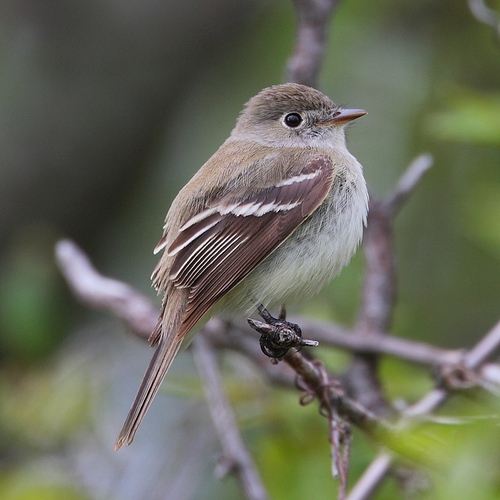
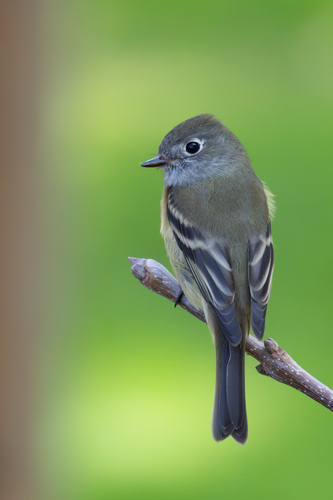
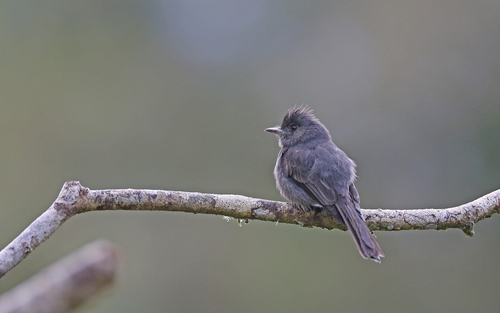
The smoke-colored pewee, scientifically named Contopus fumigatus, is a grey bird with a slight crest on its head. Its beak is orange with a black culmen. Mature individuals measure 16 to 17 centimeters in length and weigh 18 to 20 grams. This species has no sexual dimorphism, so both sexes have identical plumage. Its feet are anisodactyl: three toes point forward and one points backward, the most common foot structure among perching birds. This species is endemic to Argentina, Bolivia, Brazil, Colombia, Ecuador, Guyana, Peru, and Venezuela. Its natural habitats include subtropical or tropical dry forests, subtropical or tropical moist montane forests, and heavily degraded former forests. It is typically found at elevations between 1000 and 2500 meters, reaching up to 3000 meters in the Andes and down to sea level in Southwest Ecuador. Its range covers mountainous regions and foothills, but it avoids flat lowlands. Smoke-colored pewees are resident birds and do not migrate. This species produces altricial chicks that require substantial parental care after hatching. It builds cup-shaped nests from moss and lichen on high, horizontal tree branches. Its eggs are white with brown and lavender flecks. One research study recorded an egg incubation period of 16 days, with nestlings leaving the nest 21 days after hatching. Both male and female parents feed the chicks, but only one parent builds the nest. All nine of the studied nests were active between September and December, the drier months of the year. The mean height of the studied nests was 8.8 meters. On average, eggs were incubated for 67% of daylight hours, and nestlings received 3 to 10 feedings per hour. Clutch size ranges from 2 to 4 eggs.