About Conoclinium coelestinum (L.) DC.
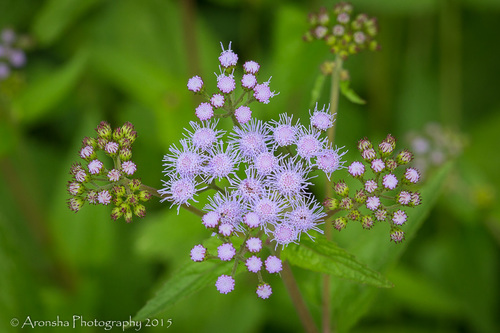
Conoclinium coelestinum, also known as blue mistflower, typically reaches 30–76 cm (1–2.5 ft) in height. It has round, light green stems that bear few to numerous branches. Its leaves grow in opposite arrangements, have an ovate to triangular shape with blunt teeth, and grow up to 8 cm (3 in) long and 5 cm (2 in) wide. Flat-topped clusters of flowerheads, called panicles that measure 3–8 cm (1–3 in) across, form at the ends of stems. Individual flowerheads are blue, purple, or lavender, and each contains roughly 40 to 50 disk florets with small tubular corollas that each have 5 spreading lobes. This species is native to eastern and central North America, with a native range extending west to Texas, north to Illinois, east to the east coast, and south to Florida. It has been introduced to New York, Michigan, and Ontario. C. coelestinum grows best in moist soils, and can be found naturally at wood edges, in sandy woodlands, in clearings, in wet meadows, and along stream banks. It tolerates a wide range of light conditions, growing successfully from full shade to full sun. Its flowering period runs from July to November, and its flowers attract bees and butterflies. It can grow in areas regularly treated with prescribed fire, and can survive repeated annual burning. Blue mistflower is commonly cultivated as a garden plant, though it tends to spread aggressively and overtake garden spaces. It is recommended for use in habitat restoration projects within its native range, particularly in areas with wet soils.